Most Hvar planning advice answers the wrong question. It tells you when to go and then leaves you to guess when to book, which is the decision that actually determines whether the trip you planned is the trip you get.
The short answer: villas three to four months out, five to six for the first half of August. Ferries two to three weeks. Group boat tours a few days. A yacht charter eight to twelve months, booked over the winter. Book in that order — accommodation first, then the crossing that serves it — because each one narrows the next.
Every lead time on one page
| What | Book it | Why that far out | Where |
|---|---|---|---|
| Yacht / catamaran charter | 8–12 months | Fixed fleet, one boat per week, booked over winter | Charter season |
| Villa, peak August | 5–6 months | The good ones are gone by spring | Stari Grad villas |
| Villa or apartment, Jun–Sep | 3–4 months | Early-booking rates close, choice narrows | Stari Grad villas |
| Hotel, Hvar Town | 2–3 months | More inventory, less scarcity than villas | Hvar Town hotels |
| Flights to Split | 3–5 months | Seasonal routes, limited off-peak capacity | Split flights |
| Car ferry with a vehicle | 3–4 weeks | The vehicle deck fills before the seats do | Ferry tickets |
| Hire car | 3–8 weeks | August fleet genuinely runs out in Split | Compare car hire |
| Catamaran, foot passenger | 2–3 weeks | 3–5 days in peak August, Sundays first | Ferry tickets |
| Private boat charter for a day | 3–6 weeks | One boat, one party, one day | Private boats |
| Airport transfer | 1–2 weeks | Cheap to hold, expensive to improvise | Transfers |
| Group boat tour | 2–7 days | Runs daily, sells by the seat | Boat tours |
| Wine cellar visit | 1–2 weeks | Small rooms, small numbers | Cellar visits |
These are planning windows, not guarantees, and they tighten every year as more of the island’s inventory moves online. Where a range is given, the early end of it is August and the late end is June or September.
The stay is the deadline
Everything else on the list is recoverable. If you miss a boat tour you take a different one; if the catamaran is full you take the car ferry and a bus. Accommodation is the one line where being late does not cost you a substitute — it costs you the trip you were imagining.
Two things drive that. Hvar’s villa stock is genuinely small: these are individual houses, most of them let by one family, and each one lets roughly fifteen weeks a year that anybody wants. And demand for them is concentrated into the same eight weeks.
So the practical calendar for a summer villa looks like this:
- September to December — properties list the following summer’s rates. Nothing is urgent yet, but the whole board is visible.
- January to March — early-booking discounts are live, often advertised at 10–30%, and the shortlist is complete. This is the window.
- April to May — the discounts lapse and the best-positioned properties for peak weeks are gone. You are now choosing from what is left.
- June onwards — for August dates you are in the resale and cancellation market.
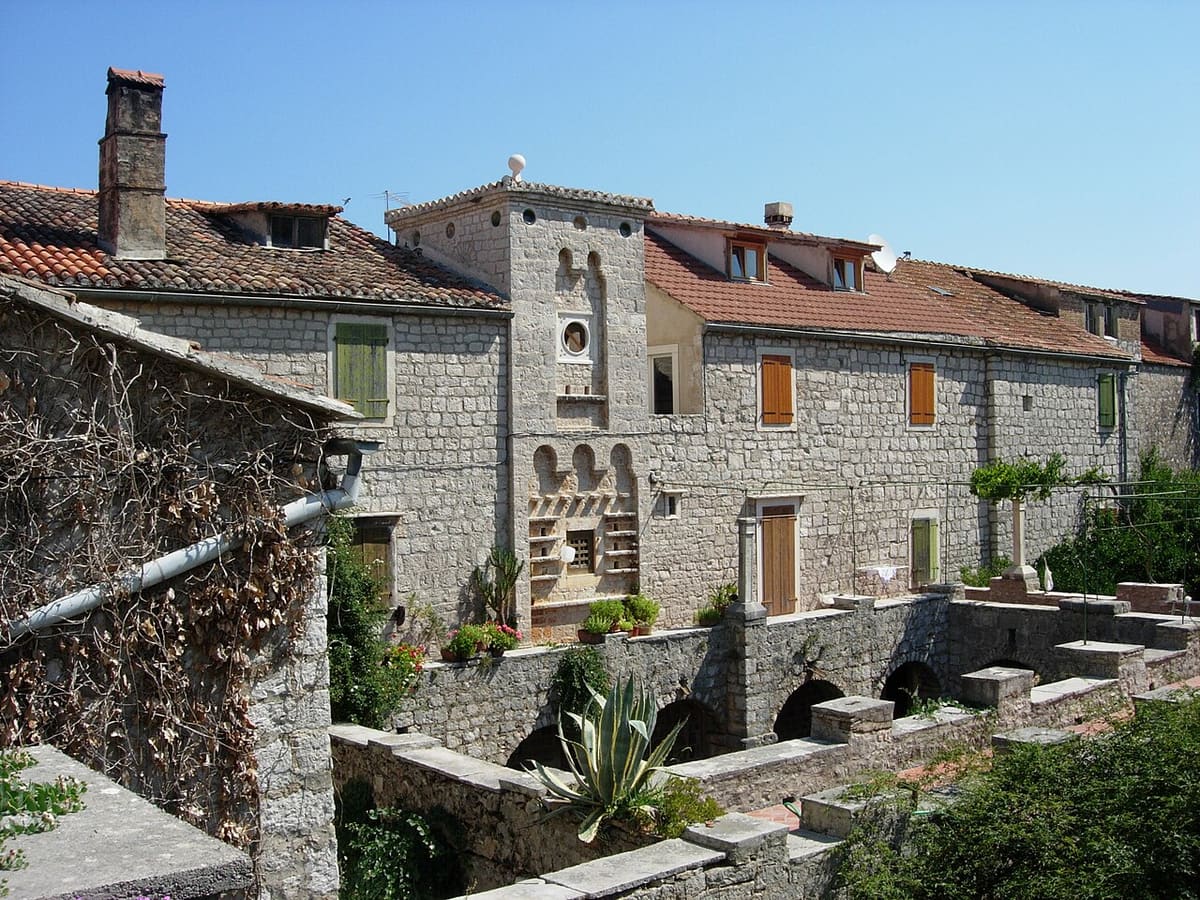
Stari Grad & the north coast
Villas on the Stari Grad plain
Hotels are a softer deadline. A Hvar Town boutique hotel has twenty or thirty rooms rather than one, and the inventory refreshes as cancellations land, so two to three months is usually enough even for August. It is still the case that the sea-facing rooms go first and the courtyard rooms are what remains.
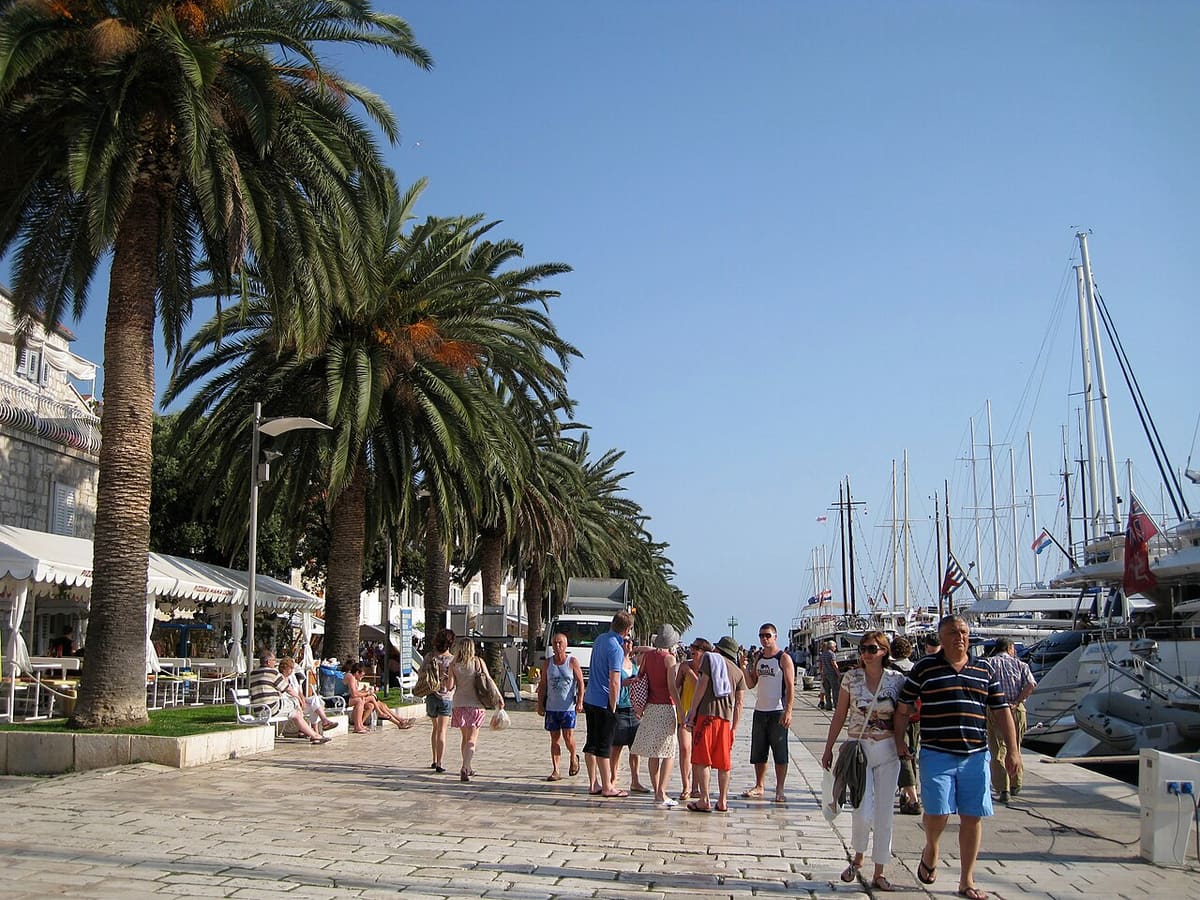
Where to point that booking is its own decision, and it is worth making before you pay for anything: Hvar Town vs Stari Grad sets out what each side of the island actually gives you, and what a week on Hvar costs shows how much the choice moves the total.
The crossing: two different deadlines wearing the same name
“Booking the ferry” means two unrelated things on this route, and conflating them is the most common expensive mistake in Hvar planning.
The fast catamaran carries foot passengers into Hvar Town. It is the boat most people mean, it is frequent in summer, and two to three weeks of notice is comfortable. In the first fortnight of August that compresses hard — sailings commonly sell out three to five days ahead, and the Sunday-evening returns to Split are the first to go, because everybody’s week ends at the same time.
The car ferry carries vehicles into Stari Grad, on the other side of the island. If you are bringing a car, the vehicle deck is a separate allocation from the passenger seats and it fills first. Book three to four weeks ahead for August dates, and understand that the foot-passenger availability you can see says nothing about whether there is room for your car.
Ferry Crossings
Live Schedules≈60 min · passenger catamaran
Check Times & Book →Live schedules and fares via Direct Ferries · we may earn a commission
The catamaran does not take vehicles and Hvar Town has no car ferry berth, so a hire car booked onto the wrong boat costs you a day and a crossing. The Split to Hvar ferry guide works through which boat serves which plan.
Two smaller timing notes that matter more than their size suggests. Morning departures are more reliable than afternoon ones in summer, because the maestral builds through the day — so the sailing you want is also the one that sells out first. And onward crossings from Hvar are thinner than the ones to it: the Dubrovnik corridor and the Korčula hop run far less often than the Split shuttle, so an island-hopping itinerary needs its connections held earlier than a straightforward return trip.
Cars: the deadline is Split, not Hvar
Hire cars for a Hvar trip are almost always collected in Split — at the airport or the ferry port — and the constraint is the Split fleet in August, not anything on the island. Three to eight weeks is the working range, at the early end for August and automatics, at the late end for a June or September manual.
Booking early also protects the price rather than just the availability: the Croatian summer fleet is finite, and the rate on a car booked in February is usually not the rate on the same car booked in July.
👉 Compare car hire rates for your dates
Whether you need one at all depends on where you are staying and how far off the Hvar Town–Pakleni axis you intend to go. Do you need a car on Hvar answers it properly.
Boats and tours: days, not months — with three exceptions
This is the part of a Hvar trip you can leave late. Group boat tours to the Blue Cave and the Pakleni Islands run daily through the season and sell by the seat, so a few days of notice is usually enough outside the peak fortnight.
The exceptions are the things with a capacity of one:
- Private boat charters. One boat, one party, one day. Three to six weeks in season.
- Early-departure Blue Cave tours. The cave is only lit properly in the morning, so the boats that get there first are the ones everybody wants. These fill days ahead even when the later departures do not.
- Wine cellars and small-group food experiences. Rooms that hold eight people, and a harvest in September that occupies the growers.
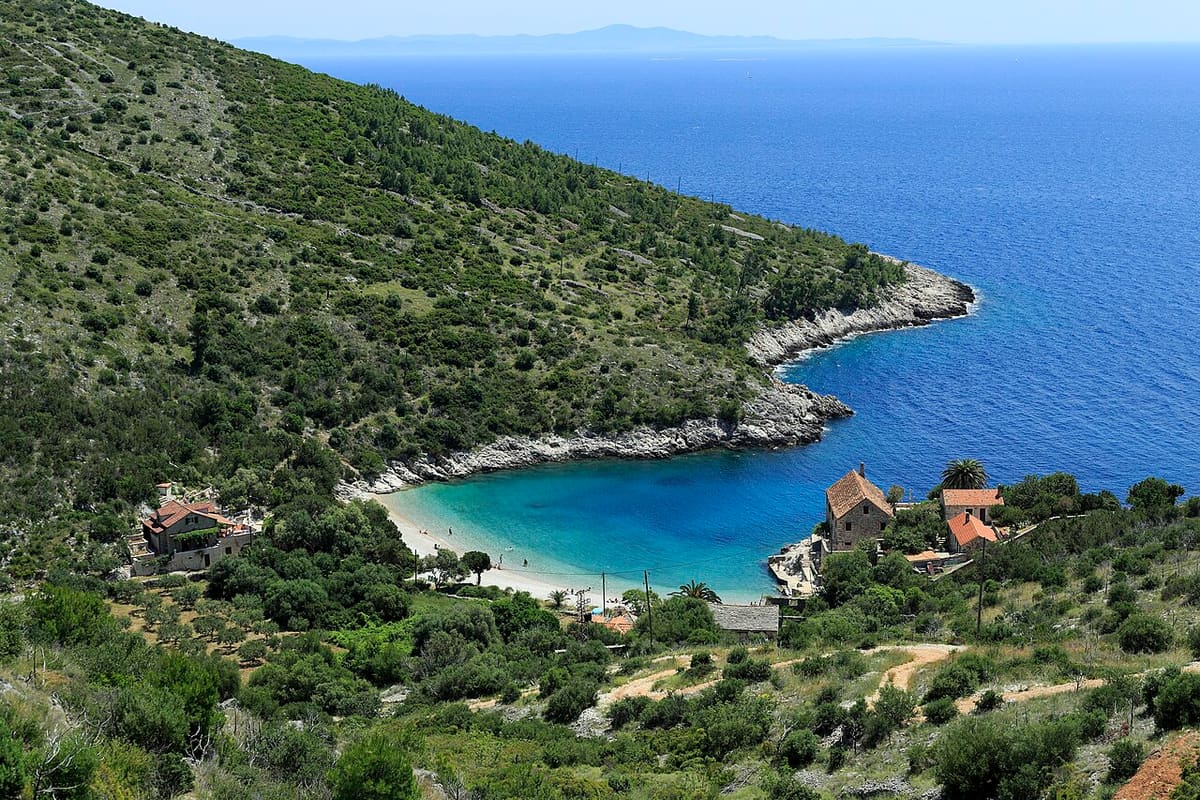
Whether the Blue Cave itself earns the day is a separate argument, and we make the case both ways in is the Blue Cave tour worth it.
Charters: the eight-month outlier
If your version of a Hvar trip involves the boat being the accommodation, none of the above applies. Crewed and bareboat charters in the Adriatic are booked eight to twelve months ahead, and the industry’s booking season runs roughly September to February for the following summer.
The reason is structural rather than fashionable: a charter fleet is a fixed number of hulls, each one lets in whole weeks, and the good weeks in July and August are a few dozen slots across the whole of Dalmatia. There is no cancellation market to fall back on the way there is with apartments.
Hvar and the Pakleni archipelago sit in the middle of almost every Split-based itinerary, which is why this is worth knowing even if the charter is somebody else’s decision. Our sister site Adriatic Yacht Guide covers when the Adriatic charter season actually books, including which weeks go first.
A countdown for a July or August trip
| When | Do this |
|---|---|
| 10–12 months out | Charter, if you are chartering. Nothing else is urgent. |
| 5–6 months out | Villa for peak August. Flights, if the route is seasonal. |
| 3–4 months out | Villa or apartment for June, July, September. Hotels for August. |
| 6–8 weeks out | Hire car. Hotels for shoulder season. Private boat day. |
| 3–4 weeks out | Car ferry with a vehicle. Onward crossings to Korčula or Dubrovnik. |
| 2–3 weeks out | Catamaran tickets. Airport transfer. Wine cellar visit. |
| 2–7 days out | Group boat tours. Restaurant tables for the nights you care about. |
Shift the whole column two to three weeks later for a late-September trip, and two to three weeks earlier for anything falling between the 1st and 15th of August.
If you are already late
It is worth saying plainly that late is not lost, because most of what gets written about booking deadlines is designed to make you panic.
- Villa gone? Look at Jelsa and Vrboska rather than Hvar Town or Stari Grad. Same island, later availability, materially lower rates.
- Catamaran full? Take the car ferry to Stari Grad as a foot passenger and the bus over the ridge. It is slower and it always has room.
- Peak week unavoidable? Move your arrival and departure off Saturday and Sunday. The whole market turns over on the weekend, and a Tuesday-to-Tuesday week finds availability a Saturday-to-Saturday one does not.
- August impossible? It is not the month you want anyway. The best time to visit Hvar makes the case for the second half of September, which is cheaper, quieter, warmer in the water, and bookable much later.
The one rule underneath all of this
Scarcity runs in the opposite direction to price attention. People agonise over a €110 boat tour they could book on Thursday for Saturday, and leave the €400-a-night villa — the thing there are perhaps thirty of — until the spring.
Book in order of how few of the thing exists. Accommodation, then the crossing that serves it, then the car, then the boats. Everything on this page is a consequence of that one sentence.