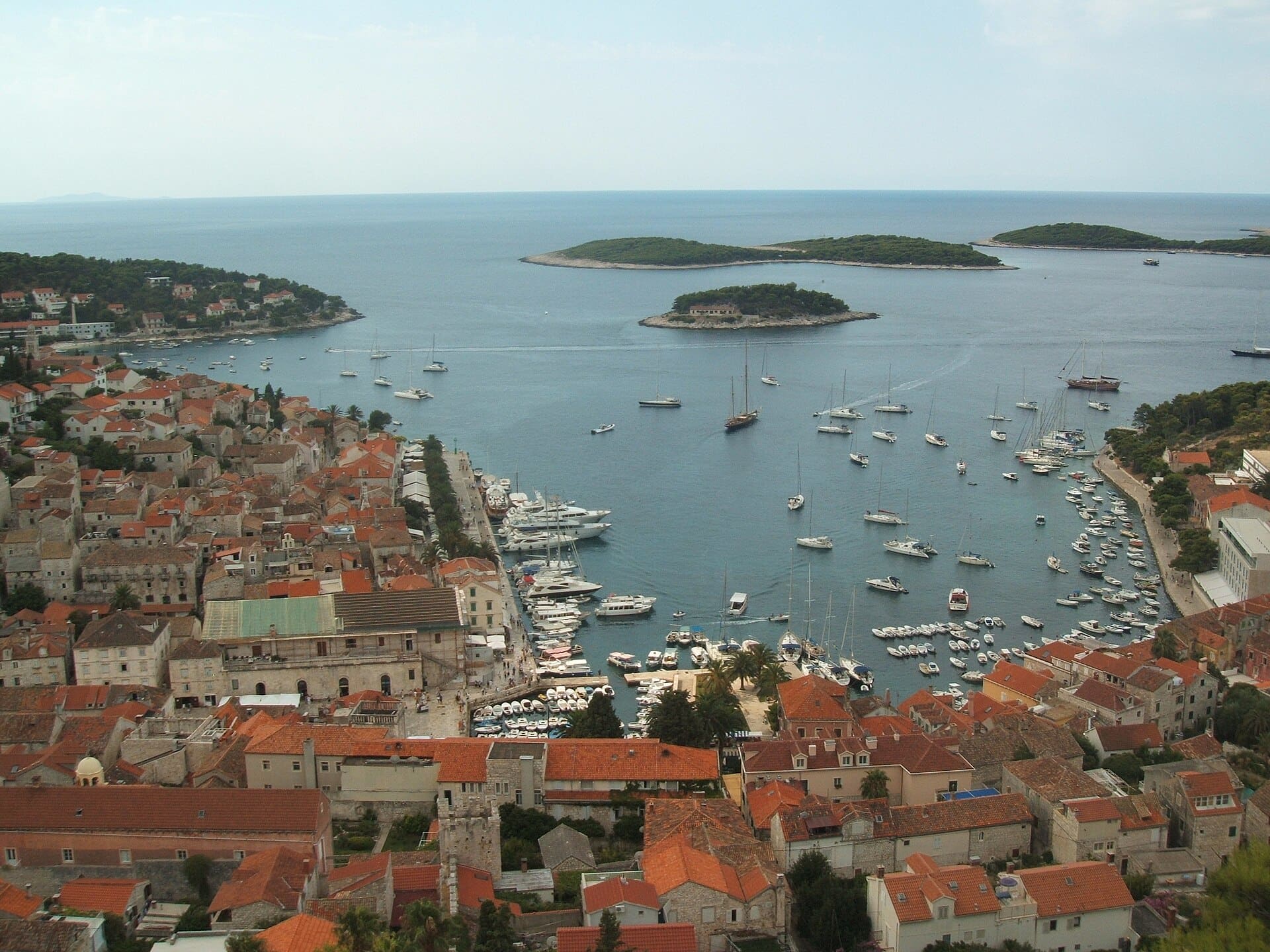
The short answer: yes, if you book an early departure and treat it as part of a bigger island-hopping day, not a destination in itself. The Blue Cave (Modra Špilja, technically on nearby Biševo island) is a genuine natural spectacle — sunlight bouncing off the white seabed through an underwater opening turns the water an intense, glowing blue — but the cave visit itself lasts only a few minutes. What makes the day worth the price is everything built around it: swim stops at the Pakleni Islands, a look at the Green Cave, and usually a stop at Hvar Town or Vis on the way back.
What actually happens on the tour
Full-day speedboat tours leave Hvar Town’s harbor early — often 7:30 or 8am — and cover real distance, since the Blue Cave sits off Biševo, west of Vis. Expect:
- The Blue Cave itself: your boat moors outside, and a small licensed vessel ferries groups of 4–6 in for a few minutes at a time. Mornings with high, direct sun produce the most dramatic light; overcast days are noticeably less impressive.
- The Green Cave on Ravnik island, which you can swim into — often the highlight for people who found the Blue Cave brief.
- Stops at the Pakleni Islands on the return leg, with an hour or two for swimming and lunch at a beach bar.
Group tour or private boat?
A shared speedboat is the value option and perfectly fine for most travellers — you’ll be with 10–15 other people, but the itinerary is fixed and well-run. If you’d rather set your own pace, skip the queue at the cave entrance, or bring family with different swimming abilities, a private boat is worth the jump in price; see our Pakleni Islands private boat day for that option. Our sister site Adriatic Yacht Guide covers the cave from a chartered boat, which is the version where you choose your own arrival time — and arrival time is the whole difference between a good Blue Cave day and a queue.
When to go
June through early September gives you the calmest seas and the strongest cave light. May and late September can still work and are quieter, but a rough-water day can close the cave entirely — check the forecast and book a tour with free cancellation if the outlook looks marginal.
Is it better than just doing Pakleni on your own?
If your time on Hvar is short — two or three days — the Blue Cave tour is the more efficient use of a day, because it covers ground (open water to Biševo and Vis) that’s genuinely hard to reach independently. If you’re staying a week or more, do both: the Blue Cave tour once, and a slower, self-directed Pakleni day by water taxi for the rest. Full logistics for getting around once you’re on the water are in our Coastal & Maritime guide.
A note on the other Adriatic blue cave
Confusingly, Montenegro has a Blue Cave of its own — a sea cave on the Luštica peninsula, reached by boat from the Bay of Kotor. It’s a different site entirely from Biševo’s, and a different kind of day: you can usually swim inside it, and tours run three to five hours for around €25–€45 rather than a full day at €110, because they’re bundled with Our Lady of the Rocks and the submarine tunnels. Both caves are weather-dependent, so neither is a guaranteed sight. If your trip takes in both countries, our sister site Kotor Travel covers the Montenegrin version so you can decide whether both are worth the boat time.