Hvar has perhaps six genuinely first-rate things to do and a long tail of pleasant ones. It is ordered by what earns its place on a three-day trip — not by what appears most often in other lists.
1. Climb the Fortica at golden hour
The Venetian fortress above Hvar Town, built on an Illyrian settlement that predates 500 BC and used to shelter the whole town’s population during the Ottoman raid of 1571. Twenty minutes up a clear stepped path from behind St Stephen’s Square.
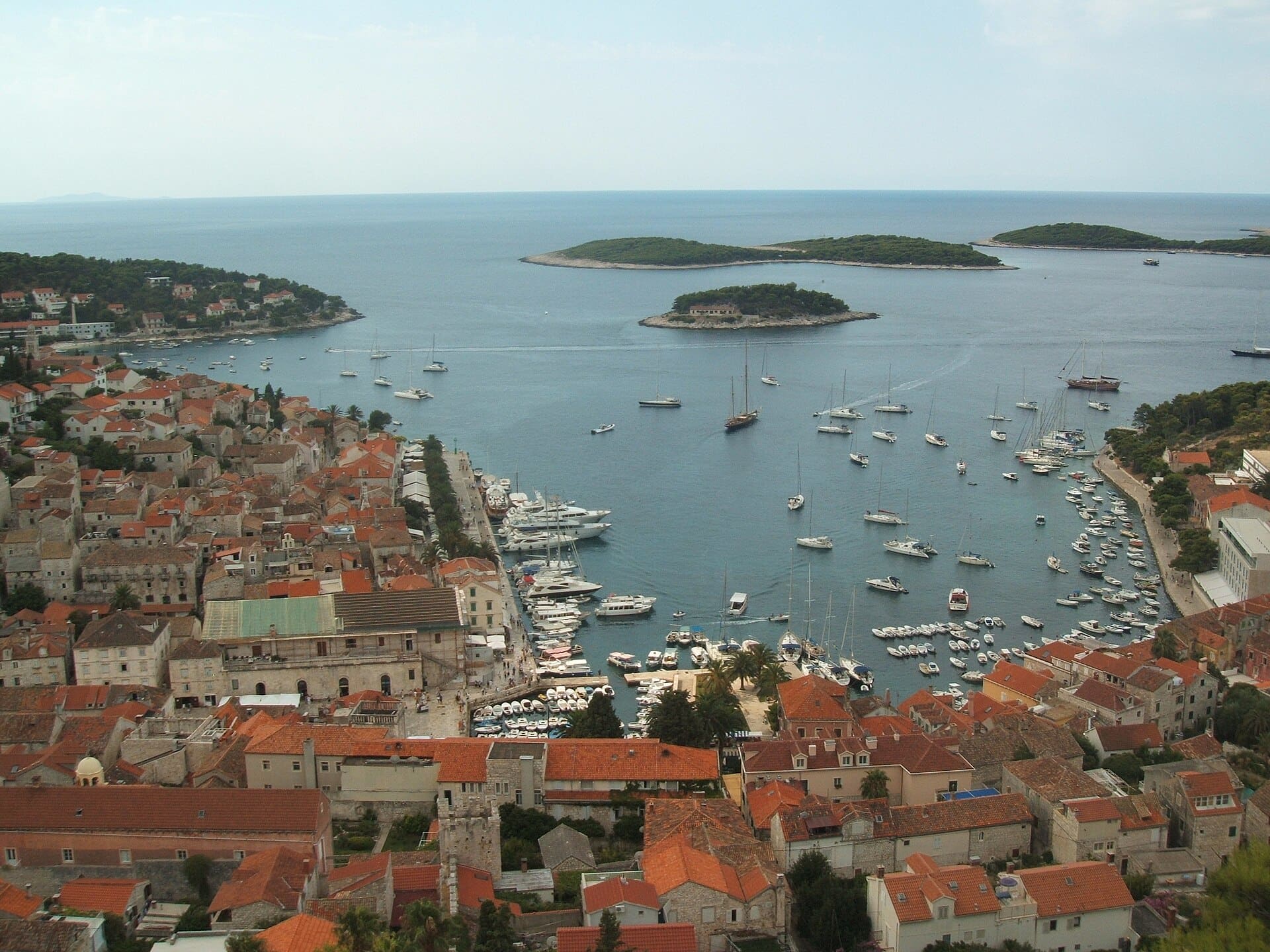
Go between five and seven in the evening. The heat has gone, the tour groups have left, and the view over the terracotta roofs to the Pakleni Islands is the single best thing to look at on Hvar. This is the one unmissable item on the island.
2. A full day in the Pakleni Islands
The archipelago starts ten minutes off Hvar Town’s harbour: a chain of wooded islets with sheltered coves, water clear enough to see the bottom at ten metres, and a scatter of beach clubs at Palmižana.
Water taxis run constantly from the harbour in summer for a self-directed day, or you can book a boat that covers several coves. Give it a whole day rather than an afternoon — the point is the swimming, and the swimming is unhurried.
There is a third option most visitors do not know exists: Croatian rules let an adult drive a boat of up to about 5 metres with an engine up to 5 kW without any licence, and the Pakleni chain starts under a nautical mile offshore — which is precisely the distance that fleet is built for. You are held to the operator’s permitted zone and they will keep the boat in when the wind gets up, so it is a calm-morning plan rather than a whole-day guarantee. Our sister site Adriatic Yacht Guide sets out the rule, the realistic prices and where the zone ends.
3. Walk or cycle the Stari Grad Plain
The UNESCO site, and the most interesting thing on Hvar if you like your landscapes with an argument in them. Greek colonists from Paros divided this plain into a grid of measured plots in 384 BC. The dry-stone walls marking those boundaries are still standing, and the vineyards and olive groves inside them are still worked — twenty-four unbroken centuries of the same field lines.
Hire a bike in Stari Grad and go in the last two hours of light, when the low sun makes the grid legible. It is free and almost never crowded. Full guide here.
4. Stari Grad’s old town and the Tvrdalj
The island’s original settlement — older than Hvar Town, quieter, and preferred by most people who spend more than a few days here. The Tvrdalj is the reason to stop: the fortified 16th-century house of the poet Petar Hektorović, built around a walled saltwater fish pond he stocked with grey mullet as a standing meditation on mortality, with inscriptions carved throughout. Twenty minutes to see, and unlike anything else in Dalmatia.
5. Wine tasting on the south slopes
Hvar’s steep, south-facing terraces around Sveta Nedjelja and Zavala grow Plavac Mali, and the cellars are open to visitors. The wine is good; the terraces — hand-built, near-vertical, worked by hand because nothing mechanical can reach them — are the real spectacle.
Easier with a driver than a car, for obvious reasons.
👉 Compare Hvar wine tastings and cellar visits
6. A day at Dubovica
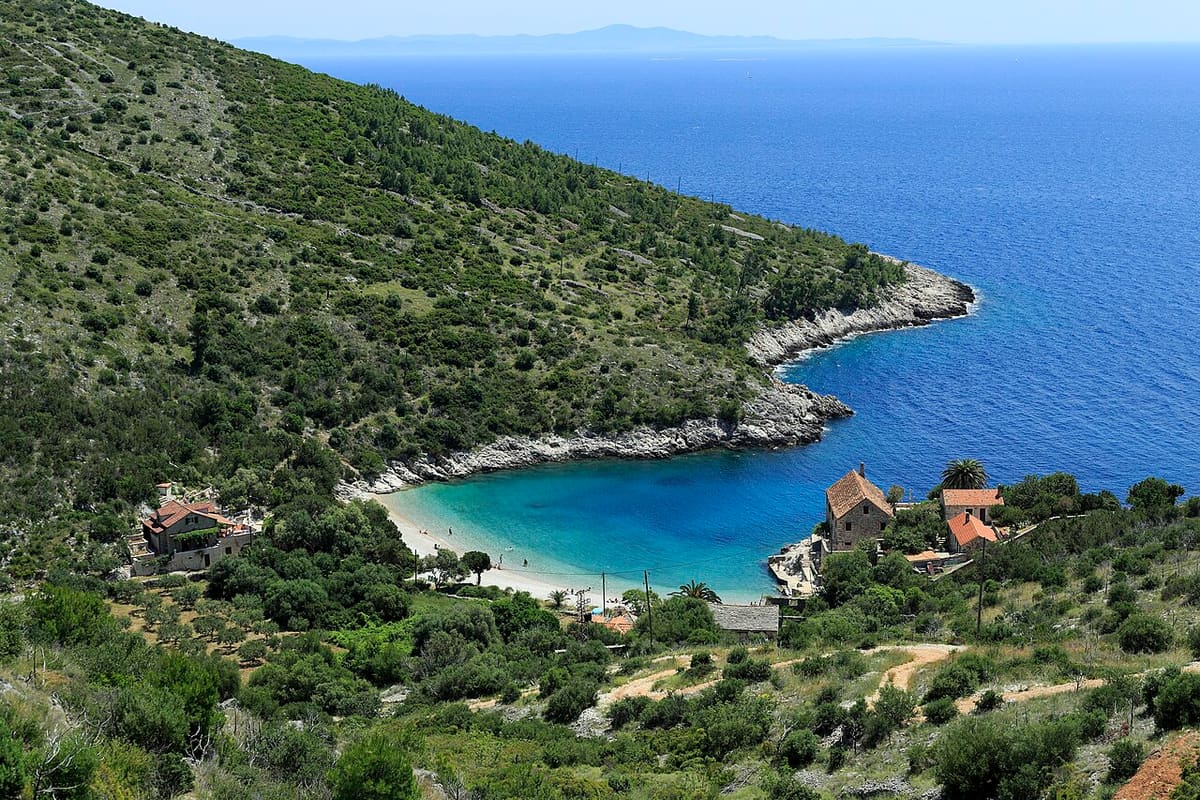
The best beach on the island: a crescent of white pebbles below a stone hamlet on the south coast, twenty minutes by car from Hvar Town and then a ten-minute walk down from the road.
Arrive before ten or after five. In between, in season, it is full. How to do it properly.
7. The Franciscan Monastery
South along the waterfront from Hvar Town’s harbour: a Renaissance cloister, a small museum of sacral art, a cypress said to be over three hundred years old, and a Last Supper canvas that is the reason most people come. The quietest courtyard in town, and a reliable wet-weather option.
8. The lavender villages — but only in late June
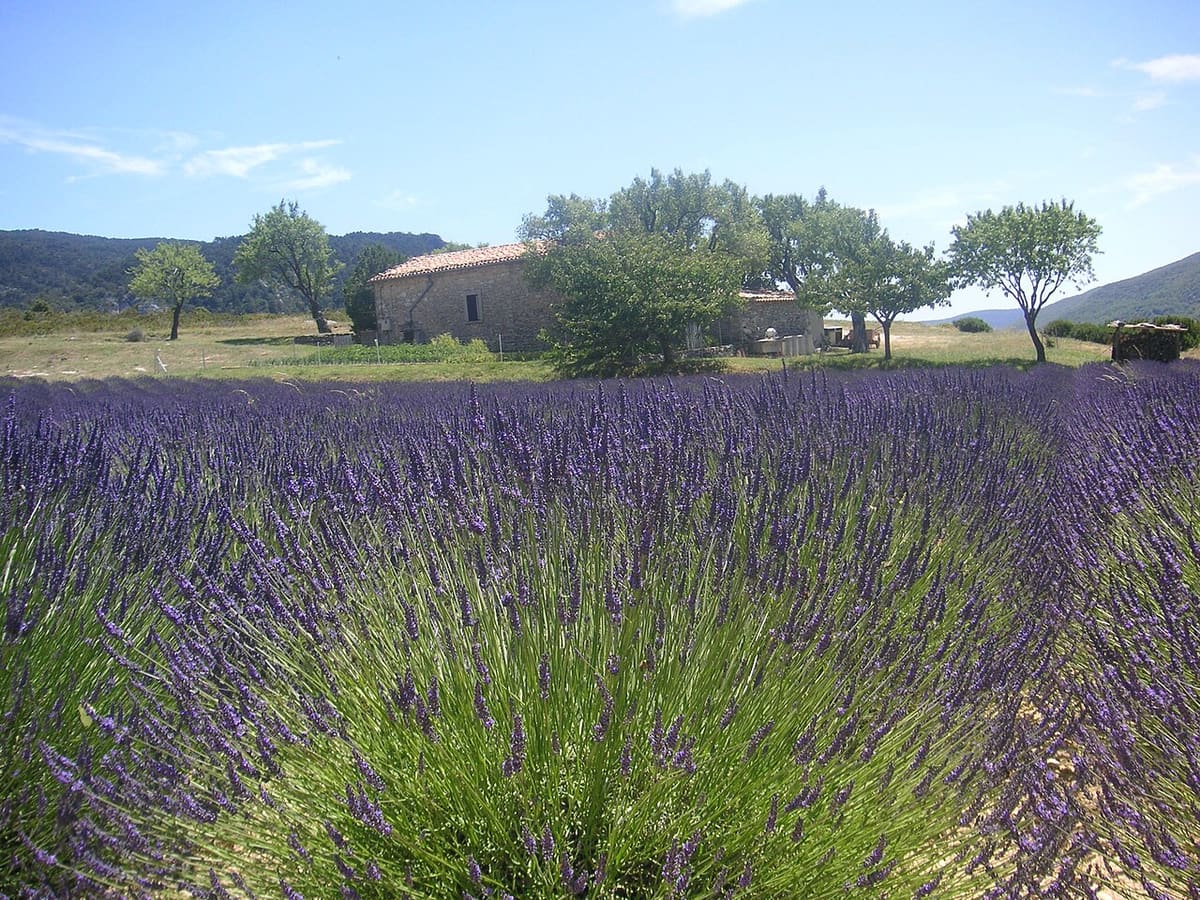
Velo Grablje and Brusje, inland on the old road between Hvar Town and Stari Grad. Hvar was once one of Europe’s major lavender producers and the terraces still show it, blooming mid-June to mid-July, with a festival at Velo Grablje at the start of the season.
Outside that window these are two quiet, half-abandoned stone villages with a good view. Worth the drive in the last week of June; skippable in September.
9. Jelsa and Vrboska
Two harbour villages on the north coast that almost no day-tripper reaches. Vrboska is the one to see — threaded by a canal, nicknamed “little Venice” with more affection than accuracy, and home to a fortress-church built to survive Ottoman raids. Half a day, and the calmest few hours you will spend on the island.
10. The Hvar Town arsenal and theatre
On the corner of St Stephen’s Square: a 16th-century galley arsenal with a theatre inserted into its upper floor in 1612 — among the oldest surviving municipal theatres in Europe, built for the whole town rather than a court. Small, quick, and genuinely remarkable.
11. A sunset drink on the riva
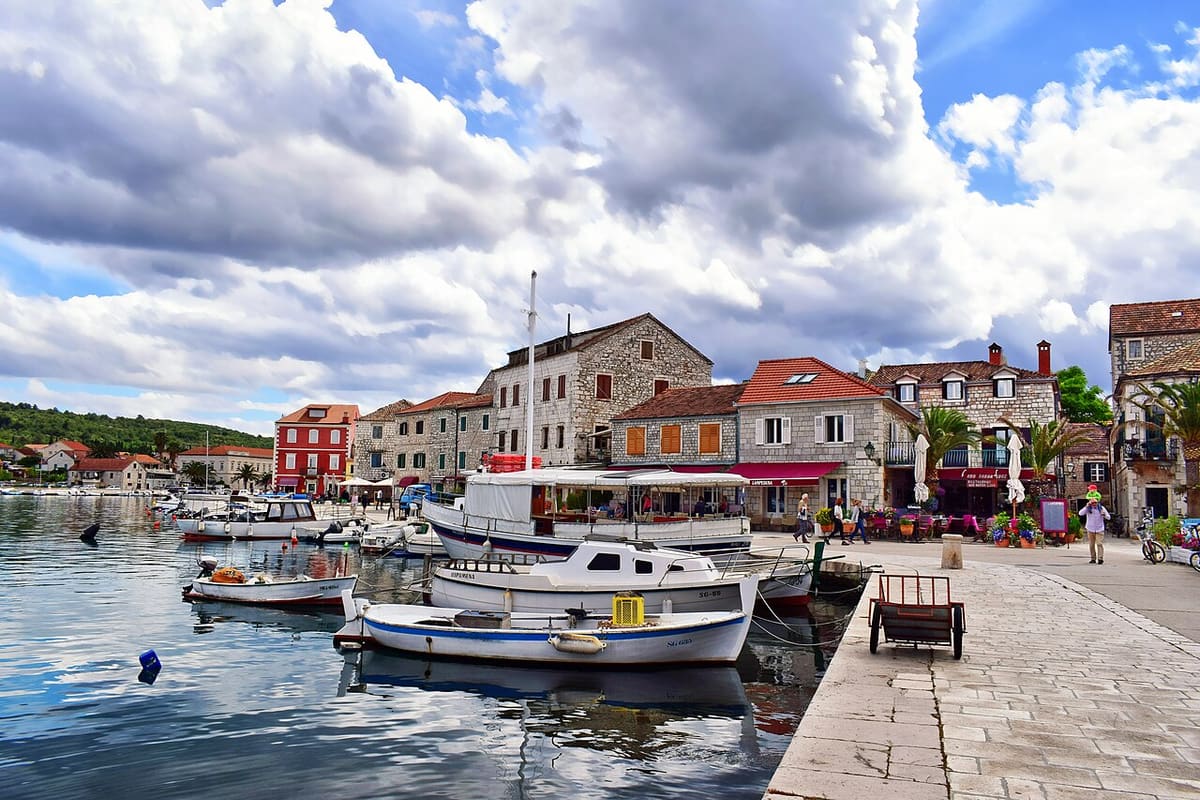
Not an attraction, and the best hour of the day. Between six and nine, after the day-trippers have taken the late catamaran back to Split and before the bars turn up the volume, Hvar Town’s harbour front is exactly what people picture when they picture Hvar.
12. The Blue Cave — conditionally
The famous one, at Biševo off Vis. Sunlight through an underwater opening turns the chamber an electric blue, and it is genuinely striking.
The caveats are real: it is a full day of boat travel for a few minutes inside, you cannot swim in it, and a rough sea closes it entirely. Worth it on a first Adriatic trip, especially bundled with the Green Cave and Pakleni swim stops. Worth skipping in favour of a Pakleni-only day if you have seen a lit sea cave before. Our full verdict.
Two things we would skip
The riva restaurants. Hvar Town’s harbour-front dining charges for the position. Walk two or three streets uphill and you pay less for better food, in a courtyard, without a passing crowd.
Hvar’s nightlife, if that is why you are coming. The island’s party reputation is a decade out of date; the town authorities reined it in substantially, and what remains is a good bar scene rather than a club destination. Come for the water and the light — those have not changed.
Fitting it into your trip
- One day: Fortica, the old town, lunch off the riva. That is the honest maximum.
- Three days: Fortica and town, a full boat day, then Stari Grad and the plain. The full sequence is in our 3-day Hvar itinerary.
- Five days: add Dubovica, a wine day, and Jelsa and Vrboska.
- A week: add nothing. Do the same things more slowly, and hire a car.
Still deciding on dates? The best time to visit Hvar covers month by month.