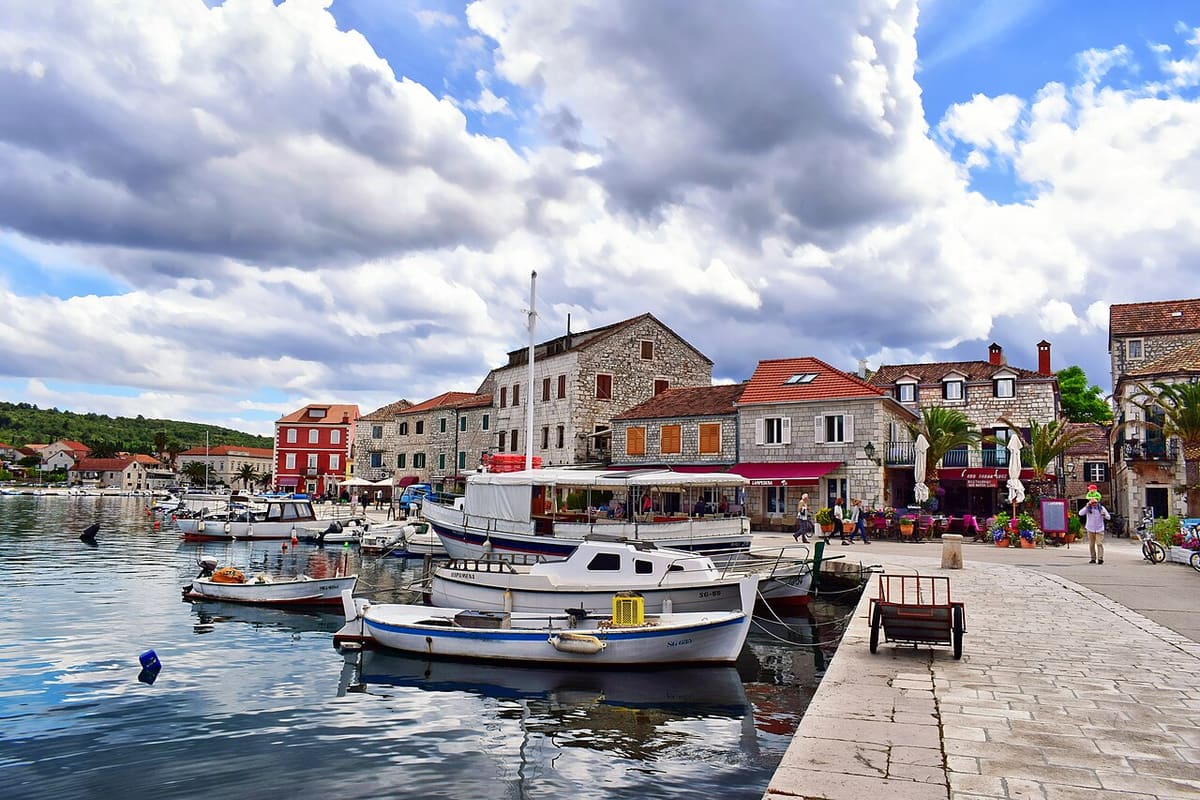
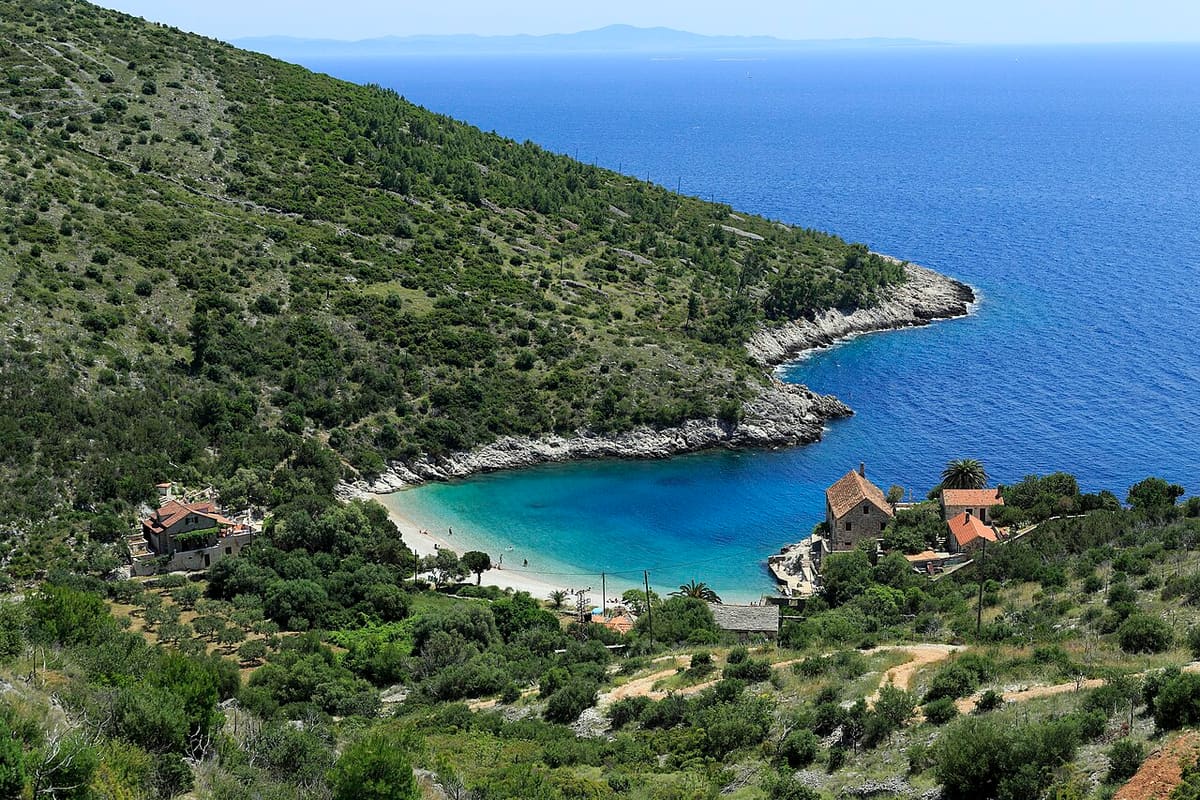
Hvar makes wine the way it does everything else: on terraces too steep for machinery, from grapes almost nobody else grows, on ground that has been continuously farmed since the Greeks laid it out.
It is also the island’s most under-sold attraction. Visitors book boat days and beach afternoons and then discover, usually on their last evening, that the thing in the glass has a better story than most of what they photographed.
The short version
- The red is Plavac Mali, off the steep south-facing terraces around Sveta Nedjelja, Ivan Dolac and Zavala — among the most highly regarded sites for the grape anywhere in Croatia.
- The white to seek out is Bogdanuša, indigenous to Hvar and grown essentially nowhere else, traditionally on the UNESCO-listed Stari Grad Plain.
- Do not drive to a tasting. The limit is low, the roads are not forgiving, and a tasting is several pours.
Plavac Mali, and why the slope matters
Plavac Mali is the dominant red of the Dalmatian coast and islands. Genetically it is a natural crossing of Crljenak Kaštelanski — the same variety as Zinfandel and Primitivo — with Dobričić, an older Dalmatian grape, which is why a good Plavac can taste like a sterner, stonier relative of a Californian Zinfandel.
What it needs is sun, heat and poor stony ground, and what Hvar’s southern face provides is all three at an almost absurd angle. The terraces above Sveta Nedjelja drop towards the sea at a gradient that rules out machinery entirely — the fruit comes off by hand and, in places, by boat. The wines are dark, high in alcohol and firmly tannic, and the better single-vineyard bottlings reward a few years.
The names you will keep meeting are the Sveta Nedjelja producers on the south slope, and inland the cellars around Jelsa, Vrbanj and Svirče, including one in Jelsa best known for a dessert wine made in the old Dalmatian style. Hvar is small enough that a half-day covers two or three properly.
Bogdanuša, and the plain it comes from
This is the one to actually seek out, because you will not find it at home.
Bogdanuša is an indigenous Hvar white, historically grown on the Stari Grad Plain — the grid of dry-stone walls and vine and olive plots that the Greeks of Pharos laid out in 384 BC and that nobody has stopped farming since, which is precisely why UNESCO listed it. The name is usually connected to bog, God, and to the wine’s traditional place on church feast days.
The wine itself is light, fresh and unshowy. On a hot evening with grilled fish it is a far better idea than a 15% Plavac, and it tastes of the specific place you are standing in — which is the only real argument for drinking local wine anywhere.
Two other indigenous varieties turn up if you ask: Prč, another Hvar white, and Darnekuša, a lighter red grown at altitude inland. Neither is common. Both are worth a glass when offered.
The plain itself is worth a morning in its own right: the Stari Grad Plain, explained.
How to actually visit
Cellars on Hvar are small rooms, not visitor centres. There is rarely a reception, a gift shop or a next tour in twenty minutes. That is the appeal and it is also why the practicalities matter more than they would in Tuscany.
- Book ahead. Capacity is a table and a few chairs. This is not a walk-in activity in season.
- Expect the grower. At many properties the person pouring made the wine, which is worth more than any tasting-room script — and means the visit runs long if you are interested.
- Go inland or south. Hvar Town has wine bars, which are a different and perfectly good thing. The cellars are elsewhere.
- Allow a half day. Two or three cellars with the driving between them is an afternoon, not an hour.
The one firm rule: do not drive
We generally take the view that a hire car opens up the best of this island. A wine tasting is the exception, and it is not a close call.
- Croatia’s limit is 0.05% blood alcohol, and zero for drivers under 24 and professional drivers.
- The route to the south-coast cellars goes over the ridge and through a single-lane, partly unlit tunnel, then down terraced switchbacks.
- A tasting is several pours, and growers pour generously.
So: an organised tour with transport, or a private driver for the afternoon. Both are cheaper than the alternative in every sense.
👉 Private drivers and transfers on Hvar
If you want the car for the rest of the week — and for the south coast, the inland villages and the beaches it is genuinely worth it — do you need a car on Hvar works through when it pays.
September: harvest, with a trade-off
The grapes come in through September, and that is both the most interesting time to visit a cellar and the least relaxing.
What you gain: a working winery rather than a performance. Fruit arriving, presses running, and a grower who will tell you what this vintage is doing differently.
What you lose: their time and their attention, because they are in the middle of the year’s work. Capacity drops exactly when visitor interest peaks.
Book earlier than you would in June, and be relaxed about the visit being shorter. September remains the best month on the island for almost every other reason too — Hvar in September sets out why.
For an unhurried tasting, June is the better month: nothing urgent is happening in the vineyard and a visit becomes a conversation. See Hvar in June.
Eating with it
Hvar’s food is the other half of this, and the pairing writes itself: the island’s reds want lamb, pašticada or anything off a grill, and Bogdanuša wants the fish.
The best-value meal on the island is the marenda — the lunchtime set offer at a local konoba, usually served between about eleven and two. It is what islanders eat, it costs a fraction of the evening carte, and it is generally better cooking than the Hvar Town waterfront produces at three times the price.
👉 Food and wine experiences on Hvar
What a week of eating and drinking here actually costs is set out in what a week on Hvar costs.
What to bring home
Two bottles, if you are only taking two:
- A single-vineyard Plavac Mali from the south slopes. It travels, it keeps, and it is the island’s serious wine.
- A Bogdanuša. Not because it is the better wine, but because it is genuinely hard to find anywhere else, and in a year’s time it will taste like the plain.
Buy at the cellar if you can. Failing that, the better shops in Hvar Town, Stari Grad and Jelsa carry the island’s producers, and the staff generally know the difference between them.
Where this fits
A wine afternoon is the thing to do on the day you are not on a boat — and on this island there should be a day you are not on a boat. Things to do on Hvar ranks it against everything else, and the three-day itinerary shows where it slots in without wrecking the rest of the trip.