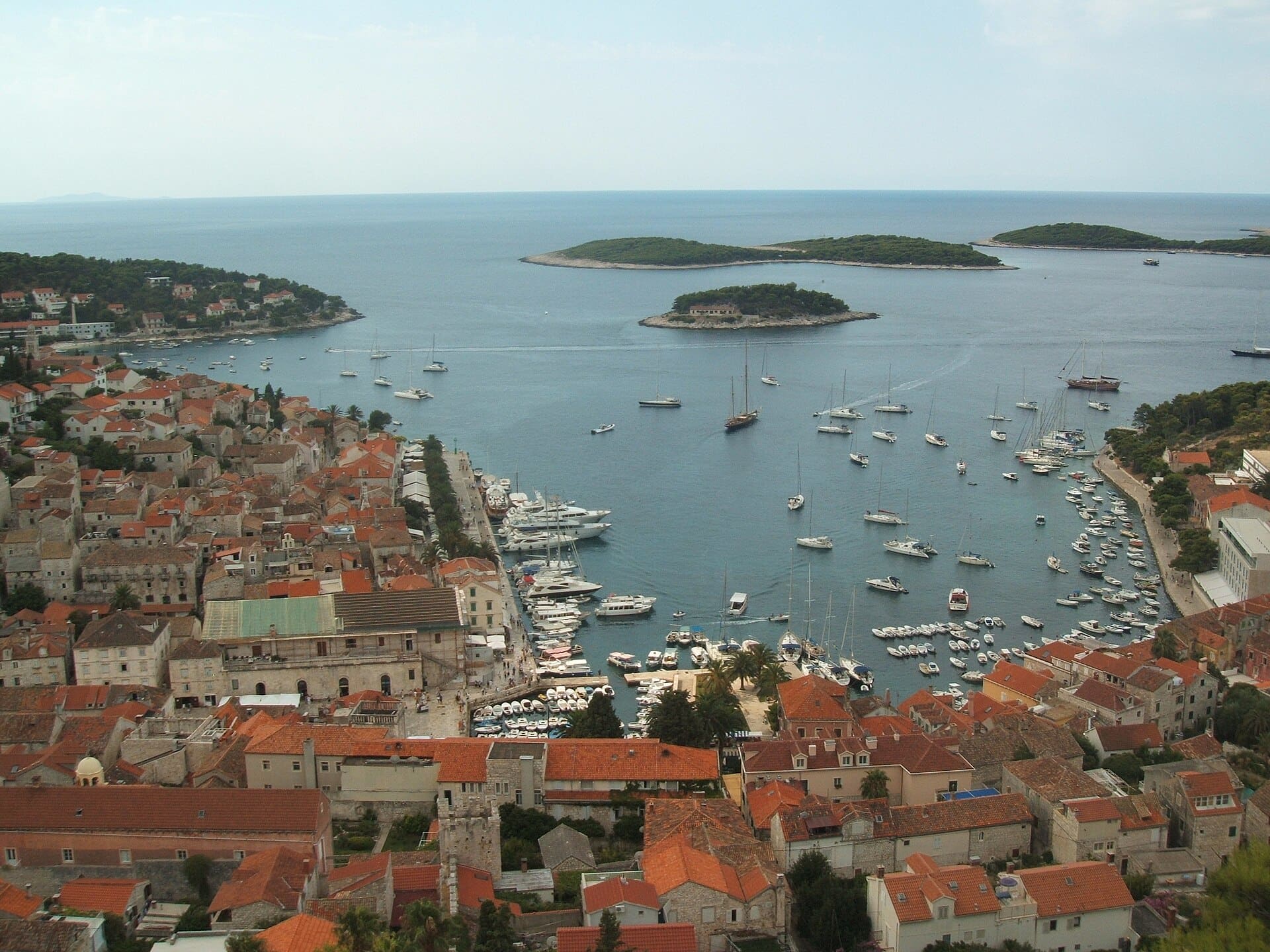
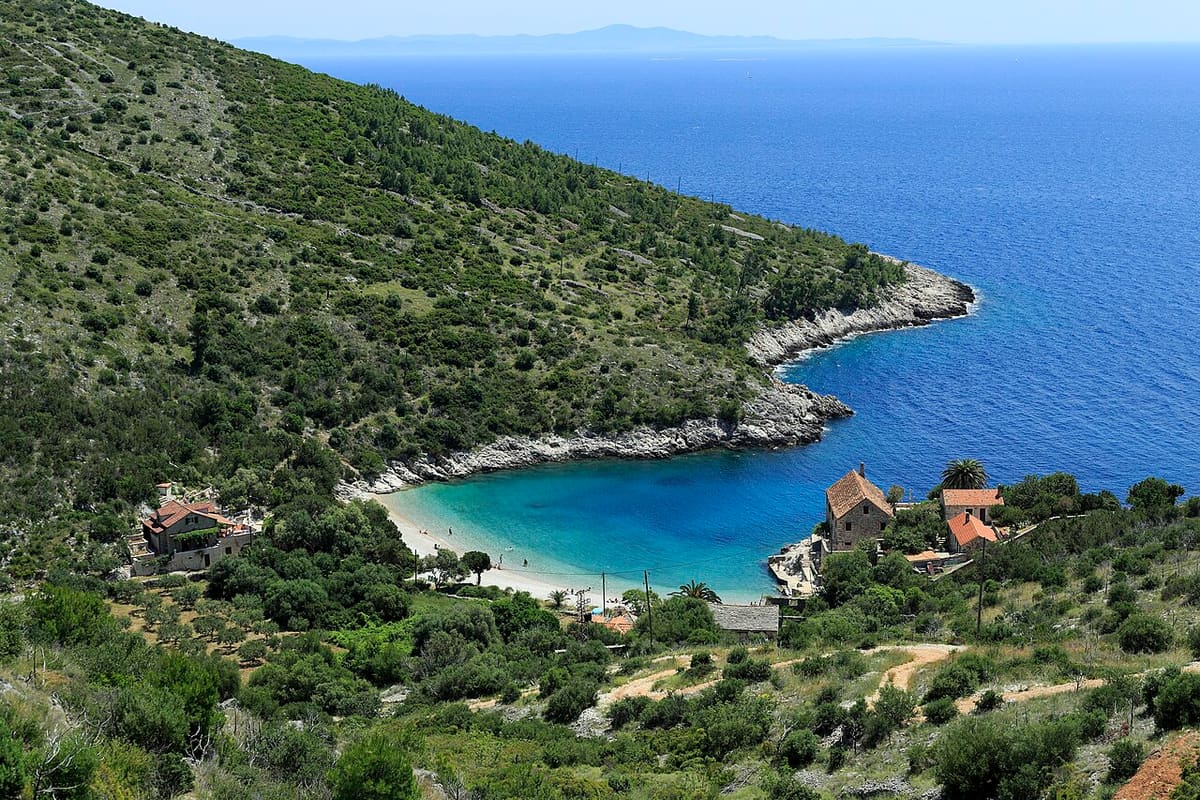
Eight kilometres east of Hvar Town, the road bends and the sea below turns an implausible bottle-green. That is Dubovica: a crescent of white pebbles wrapped around a 16th-century stone hamlet, and the image that sells the island on every postcard rack in Dalmatia.
Getting Down
There is no beach road. Park in the lay-by on the main Hvar–Stari Grad road (arrive before 9:30 in summer or you won’t find a space) and take the marked footpath — ten minutes down through the maquis, a little longer back up in the heat. Wear real shoes; leave the flip-flops in your bag.
When to Go
Dubovica belongs to two kinds of people: those who arrive before ten, and those who arrive after five. Between those hours in high season, day-trip boats anchor in the bay and the pebbles fill. Early morning is glassy and near-silent; late afternoon gives you warm light on the stone hamlet and a slow swim before dinner.
Swim Left, Then Right
The eastern arm of the bay (left, facing the sea) has the deepest, clearest water and flat rock ledges for entry. The western side shelves gently — better for cautious swimmers. Snorkelers should trace the rocks below the hamlet, where the seagrass meadows start.
Seeing It From the Water
The most memorable way to arrive is by sea — most southern-coast boat itineraries call here between cave stops:
If you’d rather set your own anchor times, that means a skippered boat rather than a hire boat — Croatia’s licence-free fleet is capped at about 5m and 5kW and the operators keep it inshore around Hvar Town, so it will not take you round to the south coast. Our sister site Adriatic Yacht Guide covers crewed charters out of Dalmatia. Dubovica at eight in the morning, from your own deck, is the island at its absolute best.