Three days is the right length for a first visit to Hvar, and the order matters more than the contents. The sequence that avoids the clashes is town, water, inland.
It assumes you arrive by the fast catamaran from Split and sleep in Hvar Town. If you are arriving by car ferry to Stari Grad, run the days in reverse.
Before you go: two bookings
The crossing. The passenger catamaran reaches Hvar Town in under an hour. The car ferry takes two hours and lands at Stari Grad, on the other side of the island. Book the one that matches where you are sleeping — this is the mistake that ruins first evenings. Full detail in the Split to Hvar ferry guide.
Ferry Crossings
Live Schedules≈60 min · passenger catamaran
Check Times & Book →Live schedules and fares via Direct Ferries · we may earn a commission
The boat day. Book it before you arrive if you are travelling between June and September. The best-rated boats sell out days ahead in peak season, and the whole itinerary hinges on day two.
Day 1 — Hvar Town, on foot
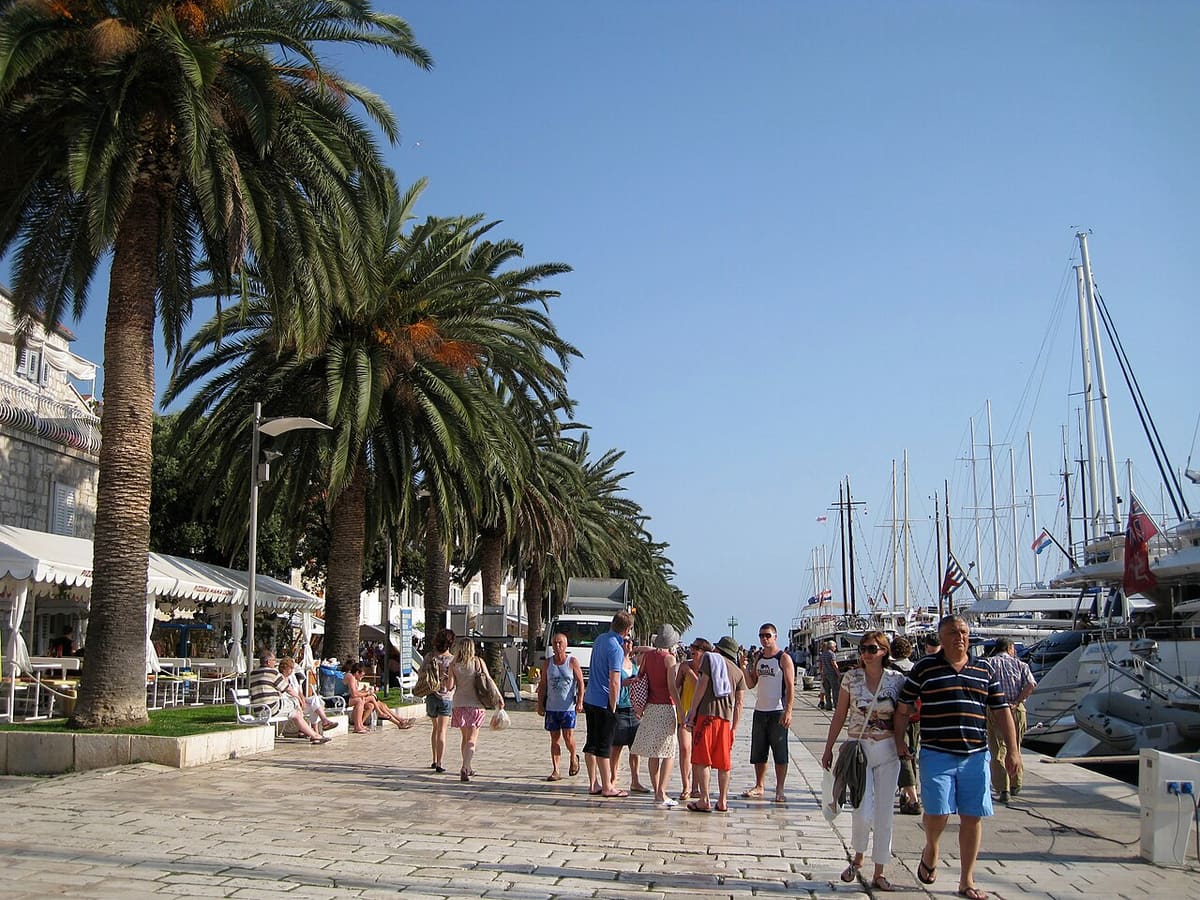
Afternoon: arrive and walk. Drop your bags and go straight out. Hvar Town is small enough that you can see its shape in an hour: St Stephen’s Square — the largest old square in Dalmatia — the cathedral at its head, the arsenal and the 17th-century theatre on its flank, and the marble-paved lanes running uphill behind.
Late afternoon: climb the Fortica. Twenty minutes up a clear, stepped path from behind the square. Go at around five or six in the evening: the heat has broken, the tour groups have gone, and the view down over the terracotta roofs to the Pakleni Islands is the single best thing to look at on the island. Take water; there is a café at the top but the climb is exposed.
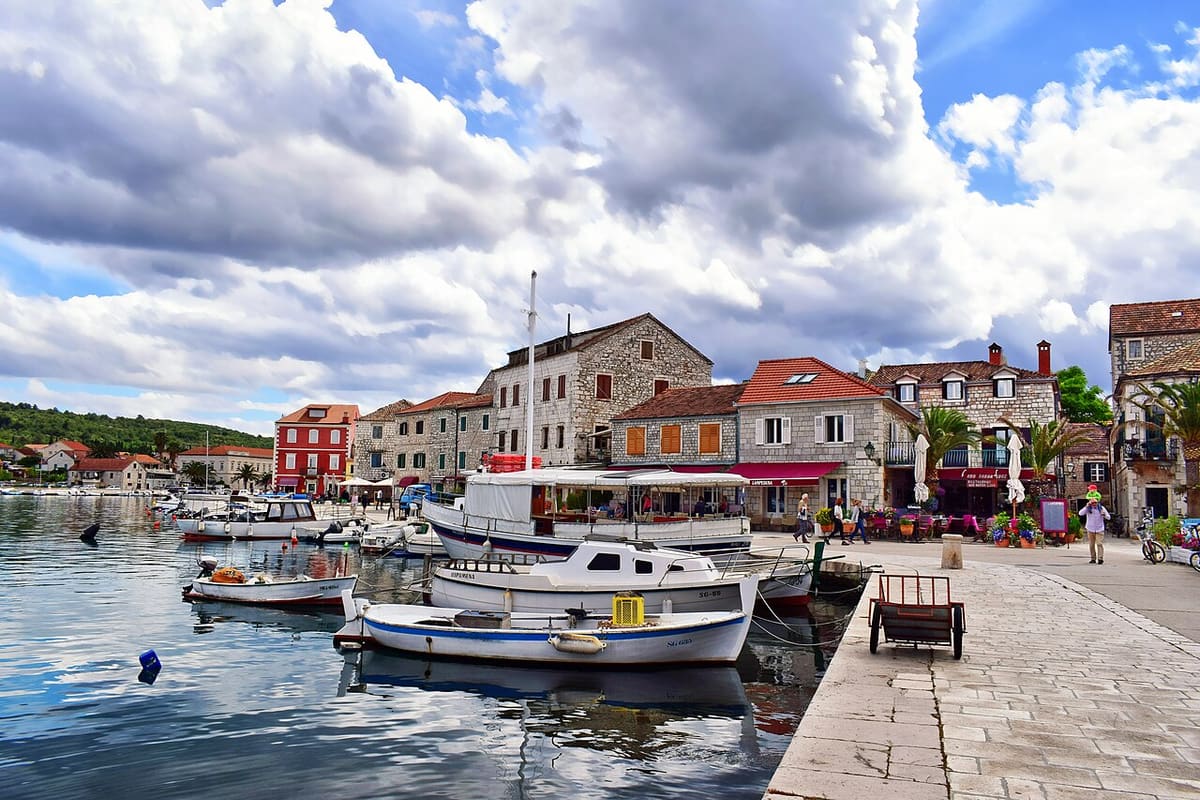
Evening: eat in the back lanes. The restaurants on the riva charge for the view. The ones two or three streets uphill charge for the food. Then a drink on the harbour front, which is where Hvar Town is at its best — after the day-trippers have taken the late catamaran back to Split and before the bars get loud.
If you only have two days, this evening plus day two is the trip. Cut day three.
Day 2 — The water
This is the day you came for, and it starts early.
7:30–8am: depart. Full-day speedboat tours leave Hvar Town harbour early because the Blue Cave sits off Biševo, west of Vis — real open-water distance. Take the earliest departure available, for three reasons: the cave’s light is strongest before the midday queue of boats builds, the sea is flattest before the afternoon maestral, and you get the Pakleni swim stops before every other boat arrives at them.
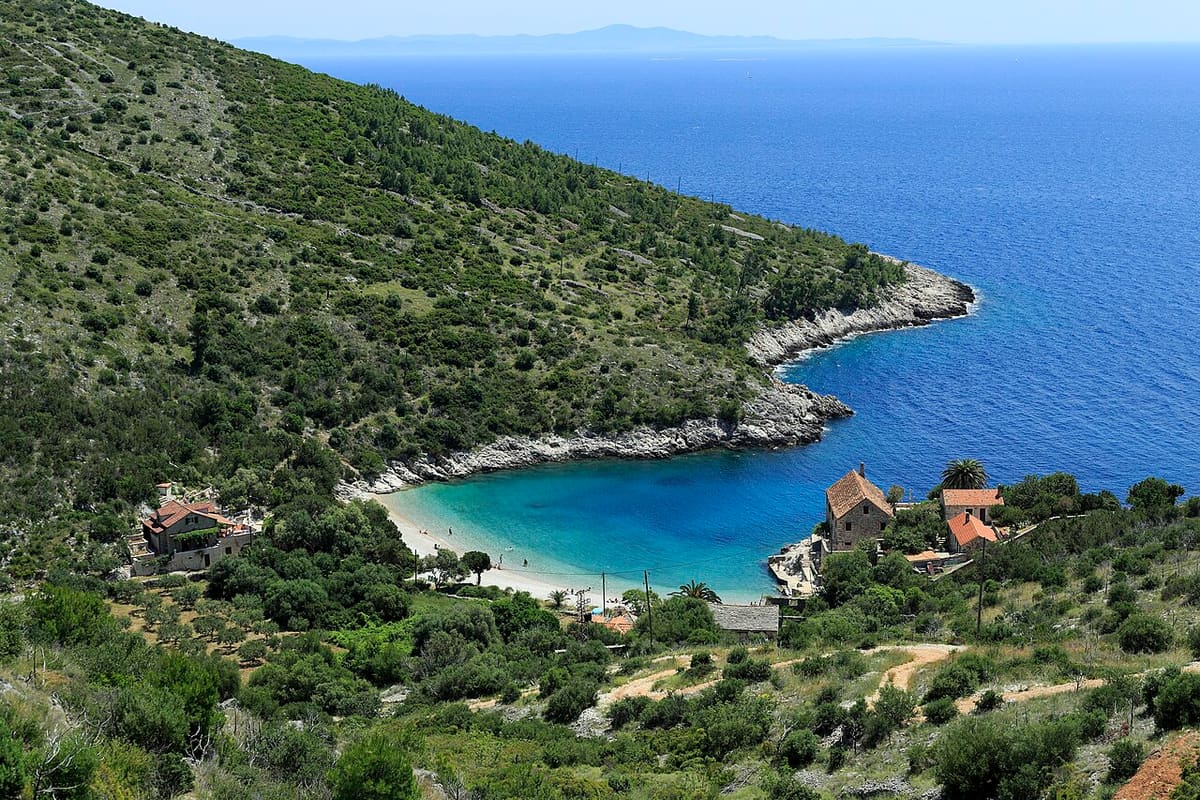
Blue Cave, Vis & Pakleni Islands Speedboat Day
What the day contains: the Blue Cave itself (a few minutes inside, ferried in by a small licensed boat), the Green Cave on Ravnik where you can swim, and two or three hours of swim stops around the Pakleni Islands on the way back.
The alternative. If you have seen a Mediterranean sea cave before, or you are travelling with anyone who does not love four hours of boat, skip the cave and do a Pakleni-only day. Less travel, more swimming, roughly the same money. Our verdict on which is right for you is in is the Blue Cave tour worth it.
👉 Compare group, private and Pakleni-only boat days
Evening: do nothing. You will have been in the sun for eight hours. Eat early.
Day 3 — Stari Grad and the plain
Morning: cross the island. The bus from Hvar Town to Stari Grad takes about 25 minutes and is timed loosely around the ferry arrivals — check the return times before you board, because the last one back is earlier than most visitors expect. A taxi takes twenty minutes.
Stari Grad itself is the older of the two towns and, for a lot of people, the more likeable: a tight stone grid around a long inlet, far fewer visitors, and the Tvrdalj — the fortified 16th-century house of the poet Petar Hektorović, built around a walled fish pond he stocked with grey mullet as a meditation on mortality. It takes twenty minutes to see and is worth every one of them.
Afternoon: the Stari Grad Plain. This is the UNESCO site, and it is not a monument — it is a working agricultural landscape. Greek colonists from Paros parcelled it in 384 BC into a grid of chora plots divided by dry-stone walls, and those same boundaries still frame the vineyards and olive groves today. Twenty-four centuries of continuous cultivation on unchanged field lines.
Walk it or hire a bike in Stari Grad. Go in the last two hours of daylight, when the low sun rakes across the walls and the geometry becomes obvious. Background and access detail in our Stari Grad Plain guide.
Evening: eat in Stari Grad and take the late bus back, or — better — build the day around a wine tasting on the plain and arrange a driver.
👉 Compare Hvar wine tastings and cellar visits
If your three days fall in the wrong season
In July and August, move everything an hour earlier and book everything a week further ahead. The Fortica at five rather than six, the boat at 7:30 rather than 8:30, dinner reserved.
In late September or October, check that your day-two boat is still operating before you build the itinerary around it — operators start closing from mid-October. See the best time to visit Hvar.
What this itinerary leaves out
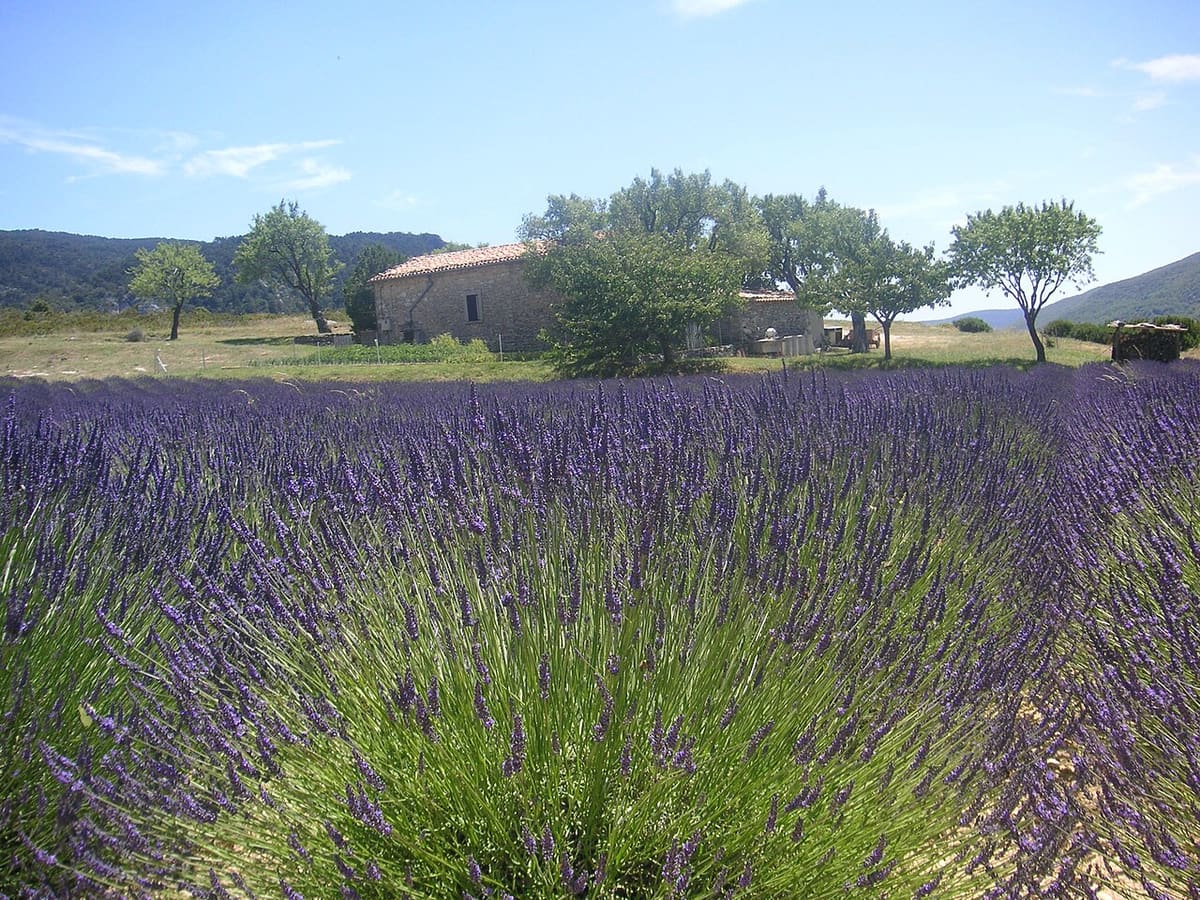
Deliberately: Jelsa and Vrboska on the north coast, the lavender villages of Velo Grablje and Brusje, the south-coast beaches including Dubovica, and any day where you simply swim.
Those are what days four and five are for. If you have them, the additions are set out in how many days you need on Hvar — and at that length, hiring a car starts to make sense.