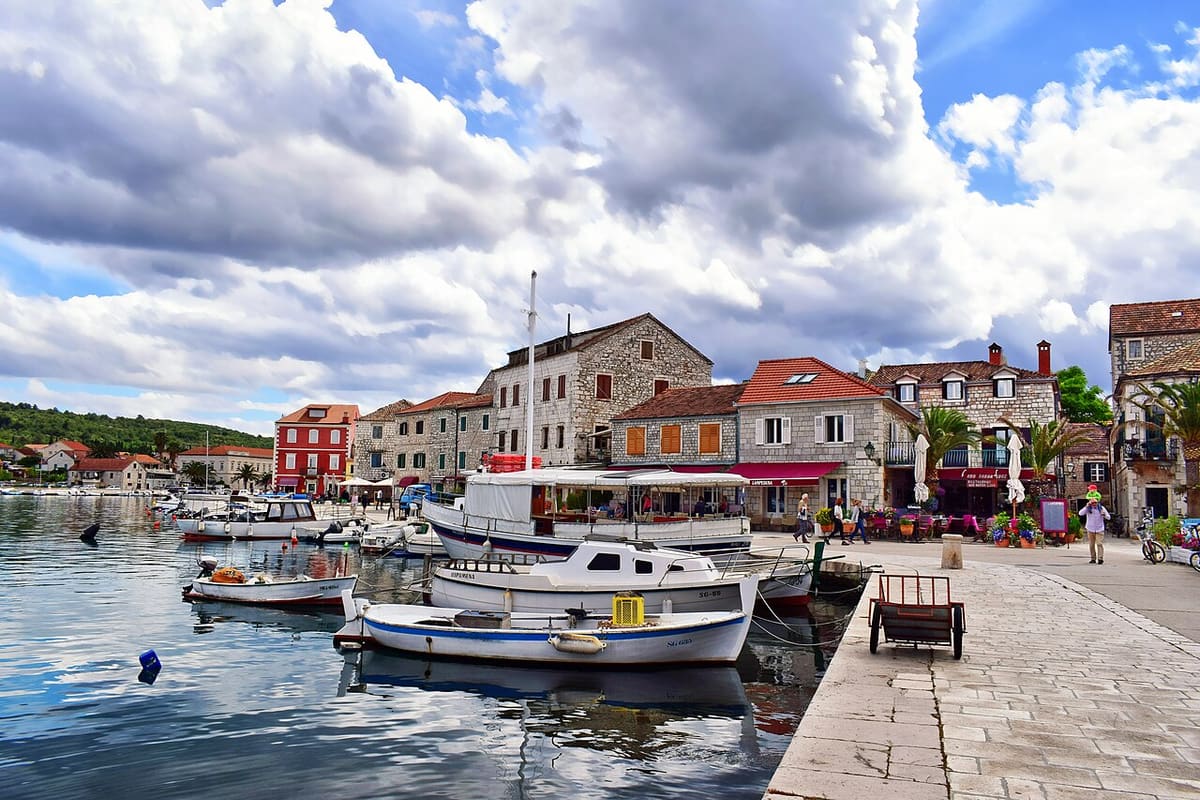
September is the best month on Hvar, and the reason is physics rather than taste. The Adriatic lags the air temperature by roughly a month, so it reaches its annual maximum in late August and holds 24–25 °C through September — while the crowds, the prices and the queues all follow the calendar instead of the water.
You get August’s sea with June’s crowds, at rates neither month charges.
September at a glance
| Early September (1–7) | Mid September (8–21) | Late September (22–30) | |
|---|---|---|---|
| Air | 27–29 °C | 25–27 °C | 23–25 °C |
| Sea | 25 °C | 24–25 °C | 23–24 °C |
| Crowds | Busy — August’s tail | Light | Very light |
| Prices | Still high | The drop | Low |
| Open | Everything | Everything | Winding down |
| Verdict | Good, not the bargain | The sweet spot | Lovely, check your boat runs |
The first week is still August
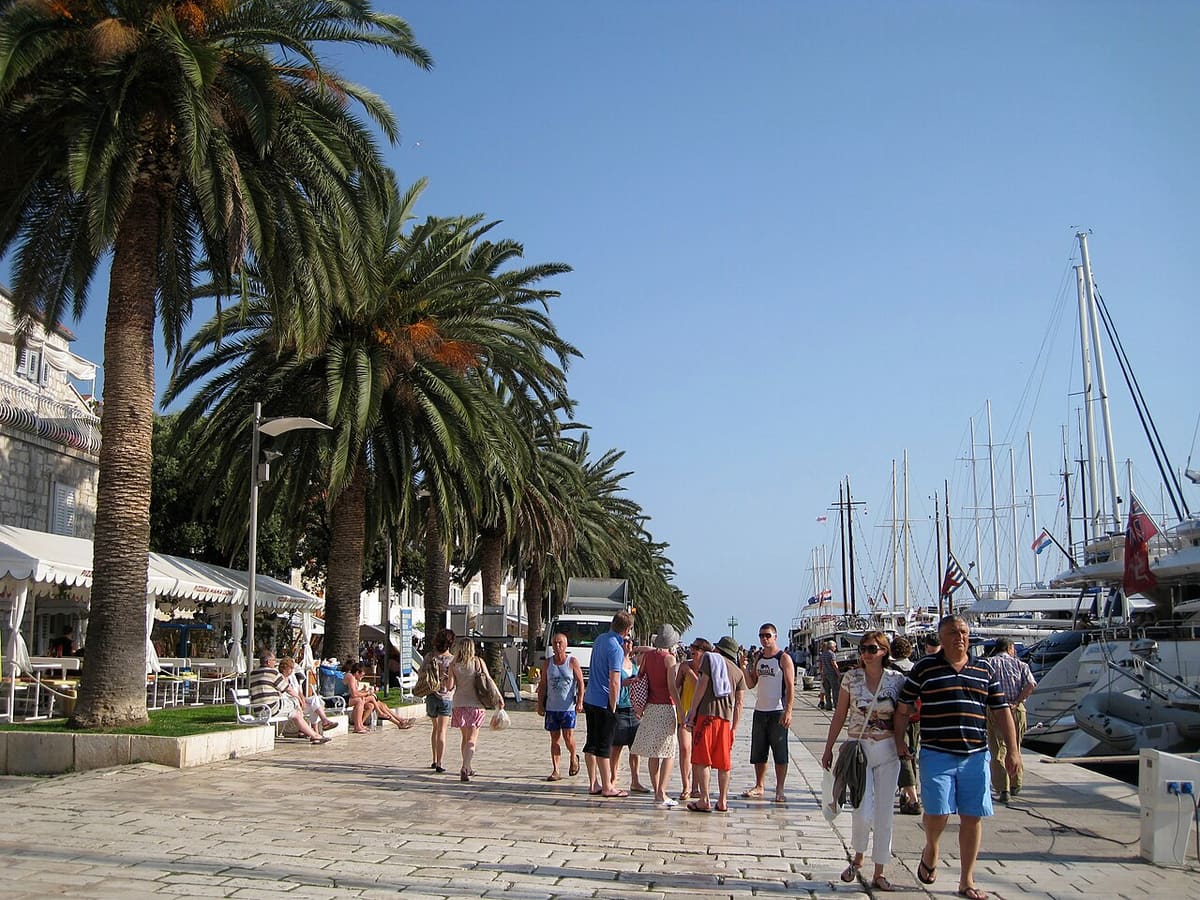
Worth knowing before you book it as a bargain. The first few days of September carry the end of the European holiday season: Hvar Town’s riva is still busy in the evening, the popular boat departures still fill, and accommodation is generally still on peak or near-peak rates.
It is a good week. It is simply not the week that makes September famous, and the difference between booking the 3rd and booking the 10th is larger than a week of weather should justify.
The second week is where the month turns
Somewhere around the 8th to the 10th the island exhales. Two things happen at once and they compound.
The crowds go. Northern European schools have gone back, the Italian season has ended, and Hvar reverts to something close to its own size. The practical version of this: you can get a catamaran seat two days out instead of five, Dubovica is a place you can simply drive to, and the restaurants that would not seat you in August have tables at eight.
The prices follow. This is the largest single price step of the year on Hvar — a double room running around €200 a night in peak August is commonly nearer €100 by the middle of September, and villas move on the same curve. The full breakdown of what a week costs at each level is in what a week on Hvar actually costs.
What does not change is the service. Boats, ferries, water taxis, konobas, wine cellars: all still running on summer schedules through the middle of the month.
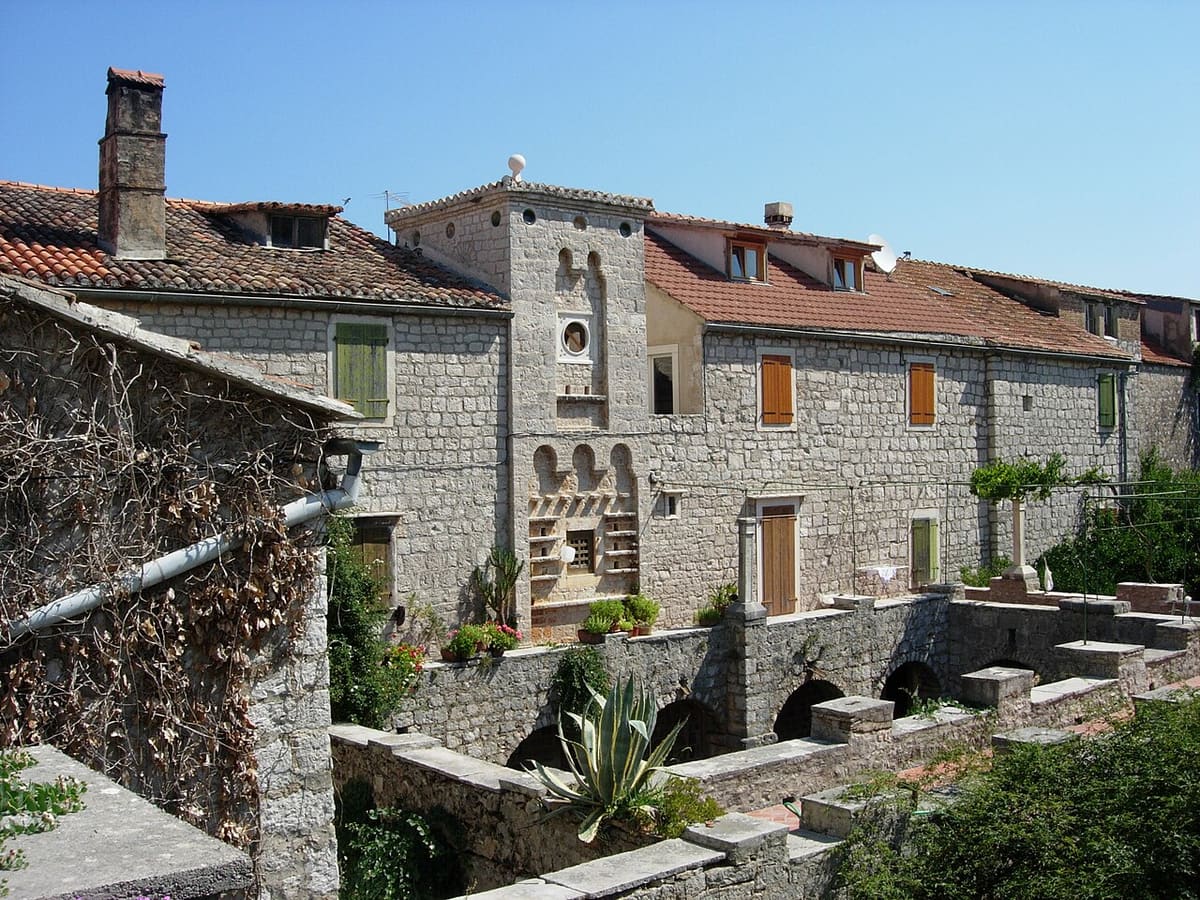
Stari Grad & the north coast
Villas on the Stari Grad plain
The swimming is better than June’s, and it is not close
This is the part people get wrong, because it is counter-intuitive and because June feels like the start of summer.
- June sea: 21–23 °C
- September sea: 24–25 °C
Water has an enormous heat capacity. The Adriatic spends June, July and August absorbing energy and then releases it slowly, which is why a September evening swim is still comfortable when the air has dropped to 22 °C and a June one is a brief and principled activity.
Add to that the second September advantage: the maestral, the north-westerly that builds through summer afternoons and chops up the sea from roughly June to August, is weakening. Flatter water means fewer cancelled boat departures and a more pleasant crossing, and it is why the Pakleni Islands are at their best in this month.
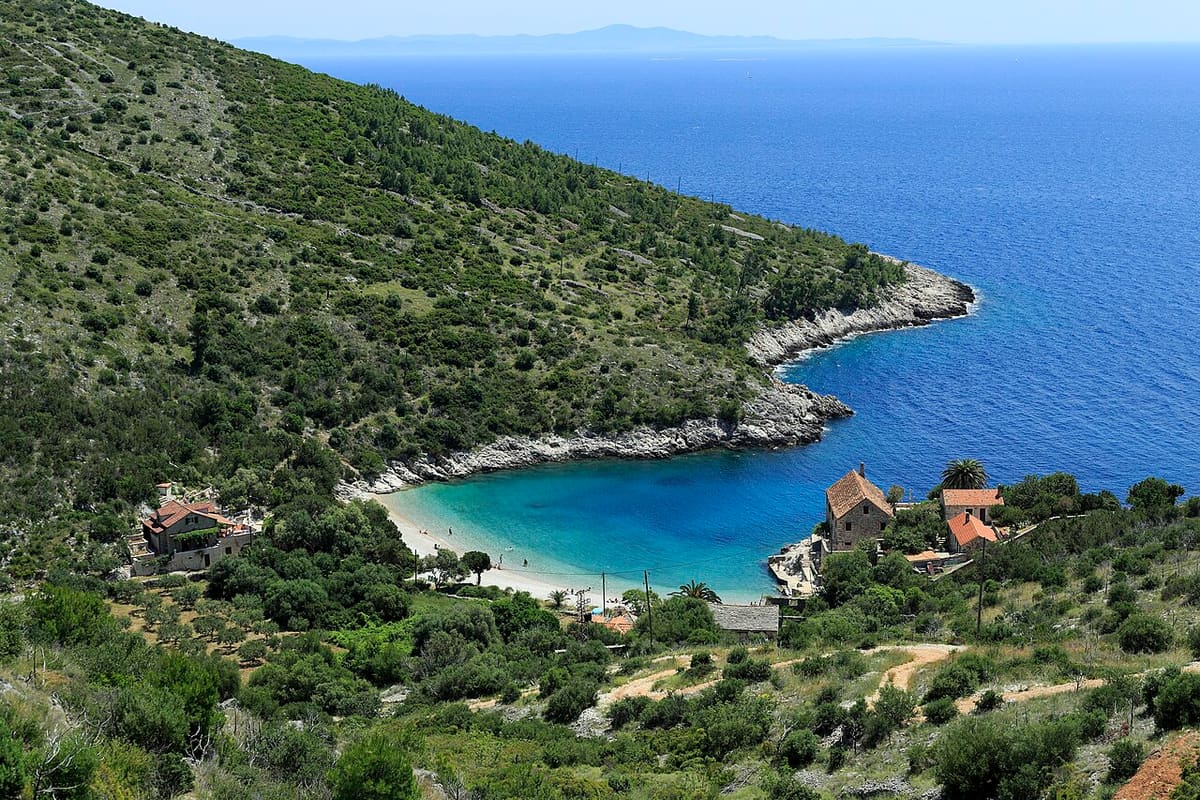
The rest of the water is covered in Hvar’s best beaches — and in September the arrival-time advice in it largely stops applying, which is the point.
What September has that no other month does
The harvest. Hvar’s vineyards are picked through September, and the island’s wine — Plavac Mali on the south-facing terraces above Sveta Nedjelja, Bogdanuša on the Stari Grad plain — is being made while you are there. Cellars are working rather than performing, which some visitors find more interesting and some find less relaxed than a June visit. Book ahead either way; these are small rooms.
👉 Wine tastings and cellar visits on Hvar
The light. The sun is lower, the haze of high summer has gone, and the hour before sunset over the Pakleni channel is the best light the island gets. If the Fortica climb is on your list, September evenings are when to do it — and unlike August, you will not be doing it in 35 °C.
Walking weather. The Stari Grad Plain, a UNESCO site and the best-preserved ancient Greek land division in the Mediterranean, is a flat grid of dry-stone walls with essentially no shade. In August that is an endurance exercise. At 25 °C it is a morning.
The last week, and the honest caveat
From about the 25th the machinery starts shutting down. It is gradual rather than abrupt, and the island does not become unpleasant — but specific things stop being reliable:
- Boat operators begin closing. Blue Cave and Pakleni day tours thin out; some run to the end of the month, some do not.
- Ferry sailings reduce as the summer timetable winds back towards the shoulder schedule.
- Individual restaurants close for the season, often with little notice, particularly outside Hvar Town.
None of this is a reason to avoid late September, which is beautiful and nearly empty. It is a reason not to build the trip around one specific boat tour without confirming it is still operating on your dates. If a Blue Cave day is the reason you are coming, travel in the first three weeks.
When to book a September trip
September is more forgiving than August, and that changes what booking early buys you: not a large discount, because the rates are already low, but the choice of property.
- Villas and apartments: two to three months out. The good ones are still available later than for August, but the ones with a pool and a view are not.
- Catamaran tickets: a week to ten days is comfortable after the first week of the month.
- Boat tours: two to five days, except the early-departure Blue Cave boats.
- Wine cellars: book these, genuinely. Harvest reduces capacity at exactly the time interest in it rises.
The full ordering, including what needs months rather than weeks, is in when to book everything for Hvar.
What to pack that you would not pack for August
Three things.
A layer. Evenings after the middle of the month drop to 18–20 °C, and you will be outside in them.
Something waterproof. September is when the dry summer breaks. Rain here arrives as a short, heavy thunderstorm rather than a grey day, and it usually clears within hours — but it arrives.
Water shoes. Not a September item specifically, just the thing visitors most often regret. Hvar’s beaches are white pebble and smooth rock; there is no sand anywhere on the island and there never was.
So: September or June?
If you are choosing between the two shoulder months, the answer depends on one question.
Swimming, boats and the water? September, comfortably. Warmer sea, calmer sea, fewer people in it.
Cheaper still, and emptier? October — the first ten days give you 21–23 °C water and almost nobody, at the cost of the boat tours beginning to close behind you.
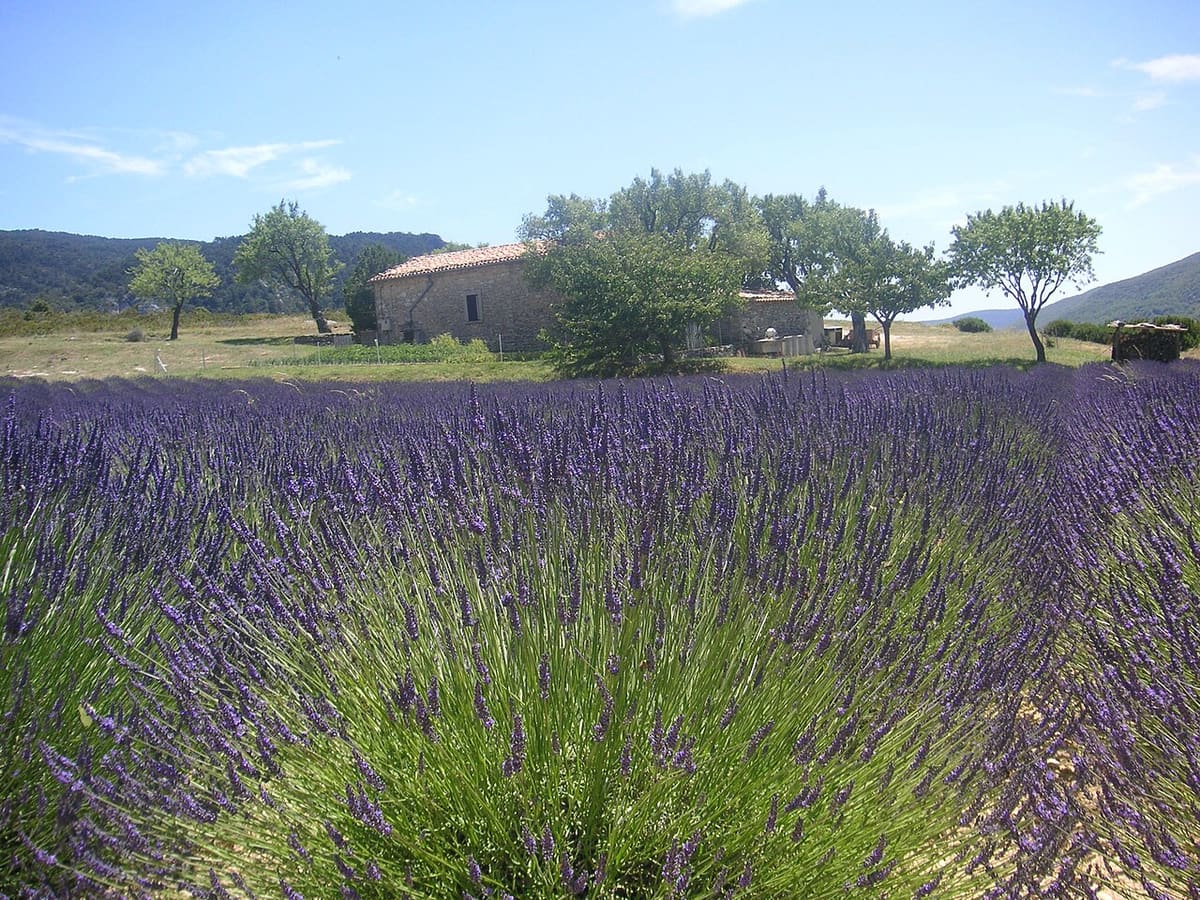
Walking, lavender, long evenings and green hills? June — the interior is still green, the days are at their longest, and the lavender above Velo Grablje and Brusje is in bloom, which September cannot offer at any price.
For the whole calendar rather than these two months, the best time to visit Hvar runs from April through to the winter closure. And if you are still working out length rather than timing, how many days you need on Hvar is the other half of the question.