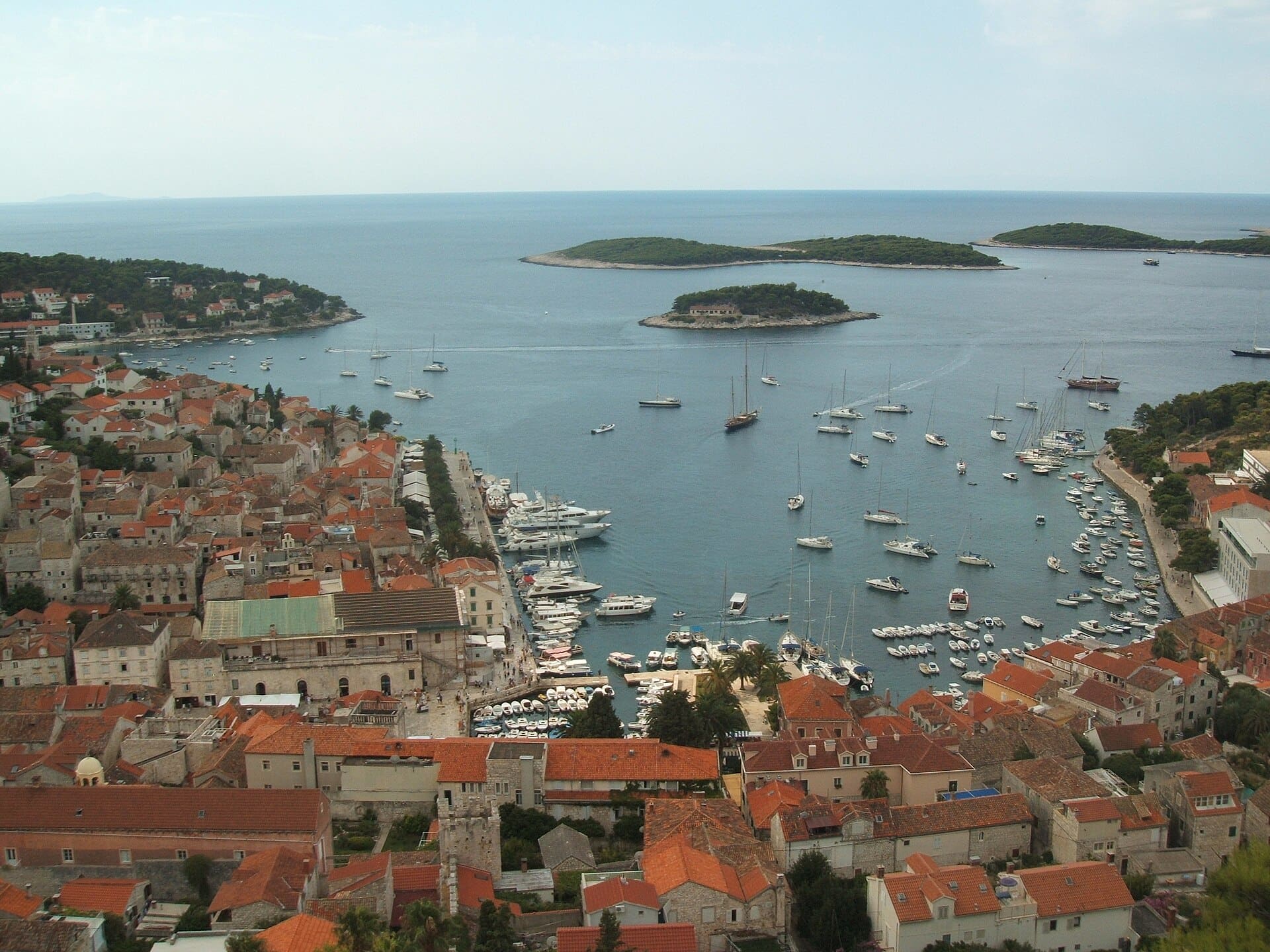
The first thing to know is that Hvar has no sand. Its beaches are white pebble, shingle and smooth rock, which is true of nearly the whole Croatian coast, and it is the reason the water looks the way it does — nothing gets stirred up into suspension. Bring water shoes and stop looking for a beach that does not exist here.
The second thing: the best swimming on Hvar is not on Hvar. It is ten minutes offshore in the Pakleni Islands.
The short list
| Where | Type | Getting there | Best time to arrive |
|---|---|---|---|
| Dubovica | White pebble crescent | Car/taxi + 10-min walk down | Before 10am or after 5pm |
| Pakleni Islands | Coves and rock shelves | Water taxi from Hvar Town | Any time — spread out |
| Palmižana | Pebble bay, beach clubs | Water taxi, 20 min | Before noon in August |
| Milna | Pebble, family-friendly | Car, 15 min from Hvar Town | Mornings |
| Jelsa / Vrboska | Shallow sheltered bays | Bus or car, north coast | Any time |
| Hvar Town rocks | Rock bathing shelves | 10–20 min walk | Early evening |
| Zavala / Sveta Nedjelja | Remote pebble, south coast | Car, via the tunnel | Any time |
Dubovica — the best one
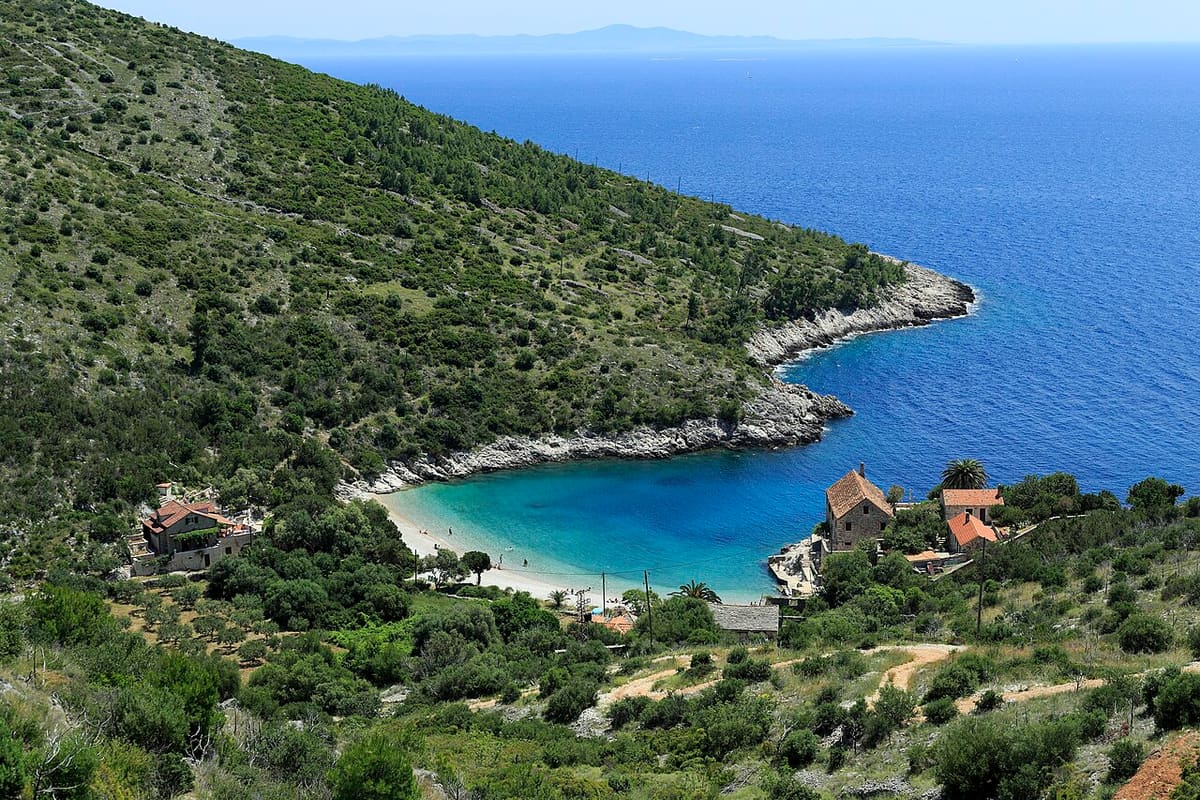
A crescent of white pebbles under a cluster of stone houses, on the south coast about twenty minutes by car from Hvar Town. You park on the road above and walk down for ten minutes on a stone path.
It is the most photographed spot on the island and it is genuinely as good as the pictures. It is also small, which is the whole problem: in July and August it goes from empty to full between ten and eleven in the morning and stays that way until late afternoon.
So: arrive before ten, or come after five and stay for the light. Both work. Midday does not. There is a single konoba for drinks and simple food, and no other facilities.
Full practical guide to Dubovica.
The Pakleni Islands — the best swimming
The archipelago strung out across the mouth of Hvar Town’s harbour, ten minutes away by water taxi and running constantly through the summer.
This is where the water is best. The islets are wooded, the coves are sheltered from the afternoon maestral, and because the boats spread people across a dozen separate bays it never feels like the crowd that Dubovica does.
- Palmižana — the main bay, with beach clubs, restaurants and a botanical garden. Busiest and most comfortable.
- Ždrilca and Mlini — shallow, sheltered, the pick for families.
- Vinogradišće — the pretty one, and the reason most boat tours stop where they stop.
- Jerolim — traditionally the naturist island, still quieter than the rest.
A full day here beats a full day anywhere on Hvar itself.
The archipelago is also the most-sailed water in central Dalmatia, and the coves that stay empty are the ones with no road and no water-taxi rank — reachable only from your own deck. Our sister site Adriatic Yacht Guide covers the Pakleni chain from the water, skippered or bareboat, if that is the version of this day you want.
Where locals actually swim
The rock shelves west of Hvar Town. Walk past the Franciscan Monastery and keep going along the waterfront. Within ten to twenty minutes you are on smooth rock platforms with ladders into deep, clear water, and almost nobody who arrived on a day-trip boat is there.
No sand, no facilities, no shade. Excellent swimming, and the best early-evening spot on the island — you can be in the water at seven and at dinner by eight.
The south coast, beyond Dubovica
Hvar’s south side is steep, dry and far less developed than the north. The road over the ridge and the single-lane tunnel through it put most visitors off, which is exactly why it is worth doing.
Zavala and Sveta Nedjelja sit beneath near-vertical vineyard terraces, with small pebble beaches and clear deep water. Ivan Dolac is similar and similarly quiet. These are drive-to-and-stay places rather than beach-hop places — bring what you need.
The tunnel to Zavala is genuinely narrow and unlit in places. Take it slowly, and do not attempt it in a large vehicle.
👉 Compare car hire for the south coast
The north coast — for families
Jelsa and Vrboska face north into sheltered water and have the gentlest entries on the island. Shallow, calm, gradual, with actual shade from pines and actual facilities. If you are travelling with small children, base here rather than in Hvar Town and the beach question solves itself.
Milna, fifteen minutes east of Hvar Town, is the closest family-friendly pebble beach to town, with a couple of restaurants and easier access than Dubovica.
What to bring
- Water shoes. Not optional. Pebble is hard on feet and the rock shelves have sea urchins.
- Shade. Most of these beaches have none. Dubovica gets afternoon shade from the hillside; the rock shelves get nothing.
- Cash. The konobas at the smaller beaches are frequently cash-only.
- Water. Facilities are minimal outside Palmižana and the north-coast bays.
Timing, in one rule
Hvar’s beaches are small, and the maestral builds through the afternoon. Swim in the morning or after five. Between eleven and four in July and August you are competing for a spot in full sun on hot stone, and the sea is choppier than it was at nine.
If you are working out when to come at all, the best time to visit Hvar covers sea temperatures month by month — the short version being that September swimming beats June swimming by some distance.
Getting to the south coast and the north coast both need wheels; whether that is worth it for your trip is covered in do you need a car on Hvar.